
Jewelry insurance for collectors involves accurate appraisals that consider materials, craftsmanship, and rarity to guarantee your pieces are properly valued. It’s essential to document your collection with photos and receipts, which support claims and help you avoid under or overinsurance. You can extend standard policies with specialized coverage tailored to high-value or unique items. Ongoing appraisals and careful policy choices protect your investment and provide peace of mind. Keep going to discover more expert tips for safeguarding your jewelry collection.
Key Takeaways
- Appraisals evaluate jewelry’s materials, craftsmanship, rarity, and market value to ensure accurate insurance coverage.
- Select coverage options based on collection size, value, and rarity, considering specialized policies for high-value items.
- Proper documentation, including photos and receipts, is essential for claims and supports accurate valuation.
- Review and update insurance policies regularly to reflect collection growth and changes in jewelry value.
- Specialized jewelry insurance offers tailored protection, often exceeding standard homeowner’s or renter’s policies.

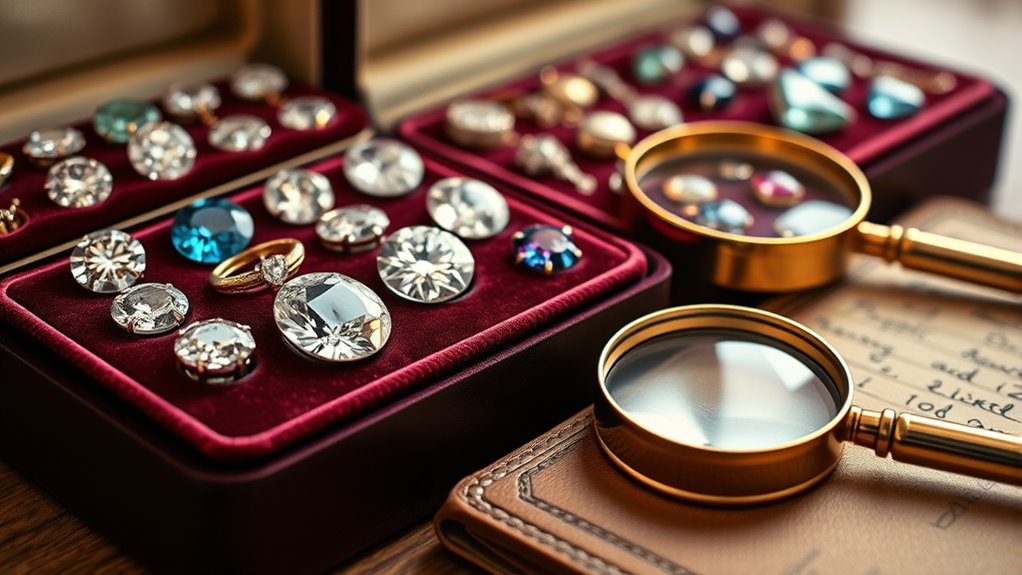
Have you ever wondered what it takes to protect your valuable jewelry? When you’re invested in pieces that hold both sentimental and monetary value, understanding the insurance process becomes essential. One of the first steps in safeguarding your collection is the appraisal process. This involves having your jewelry evaluated by a qualified appraiser who considers factors like materials, craftsmanship, rarity, and current market value. An accurate appraisal ensures that you know exactly what your jewelry is worth, which is vital when selecting the right coverage options. Without it, you risk underinsuring your pieces, leaving you unable to fully recover if they’re lost or damaged. Conversely, overestimating value can lead to unnecessarily high premiums. That’s why getting a professional appraisal is an upfront investment that pays off in the long run. It provides the foundation for choosing the right insurance coverage and helps streamline the claims process if needed. Proper documentation, such as detailed photographs and receipts, further supports your claims process and can be an essential part of insurance claims documentation.
Once your jewelry is appraised, you can explore various coverage options tailored to your collection. Standard policies often provide basic protection against theft, loss, or damage, but they might not cover every scenario, especially for high-value or unique pieces. You might need specialized endorsements or riders that extend coverage to specific items or add extra protection for situations like mysterious disappearance or accidental damage. These options give you peace of mind, knowing that your jewelry is protected against a broader range of risks. When selecting coverage options, consider factors like the value of your collection, how often you wear certain pieces, and whether you have any particularly rare or expensive items. Sometimes, your homeowner’s or renter’s insurance can be extended to include jewelry, but it’s essential to review the limits and exclusions carefully. In many cases, standalone jewelry insurance offers more detailed coverage and tailored benefits suited for collectors.
Understanding the appraisal process and the available coverage options equips you to make informed decisions about protecting your jewelry. It’s not just about insuring your pieces—it’s about ensuring you can replace or repair them if the unexpected occurs. Taking the time to get accurate appraisals and selecting appropriate coverage options ensures your collection remains secure, preservation of your investment, and your peace of mind intact. Protecting jewelry isn’t a one-time task; it’s an ongoing process that adapts to your collection’s growth and changing needs. When you approach it with knowledge and care, you’ll be better prepared to face any mishaps with confidence, knowing your treasured pieces are properly insured and protected.
Frequently Asked Questions
How Often Should I Review My Jewelry Insurance Policy?
You should review your jewelry insurance policy at least once a year, especially during policy renewal time. This helps guarantee your coverage stays up-to-date with any changes in your collection’s value or circumstances. Additionally, consider reviewing your policy whenever you acquire new pieces or experience significant life events. Regular reviews allow you to update coverage, avoid gaps, and make sure you’re protected against potential losses.
Does Jewelry Insurance Cover Accidental Damage or Only Theft?
Sure, your jewelry insurance might sound like it covers everything, but don’t get your hopes up. It typically covers theft and, sometimes, accidental damage—if your policy explicitly includes it. Watch out for policy exclusions, because not all accidental damage is covered, like drops or mishaps during daily wear. So, read the fine print carefully, or you might find yourself uninsured for the very accident you feared most.
Are There Discounts Available for Insuring Multiple Pieces?
Yes, you can often find multi-piece discounts through policy bundling. Insurance providers may offer lower rates if you insure multiple jewelry pieces together, saving you money. By bundling your policies, you simplify your coverage and potentially open special discounts. Always ask your insurer about multi-piece discounts and policy bundling options to guarantee you’re getting the best deal for your valuable jewelry collection.
What Is the Process for Filing a Jewelry Claim?
When you file a jewelry claim, start by gathering claim documentation like photos, receipts, and appraisals. Contact your insurer promptly, providing these documents. They’ll arrange a damage assessment or inspection if needed. Be honest about the damage or loss, and follow their instructions carefully. Once they review everything, they’ll process your claim and determine coverage, helping you get your jewelry repaired or replaced efficiently.
How Does Jewelry Appraisals Affect Insurance Coverage?
Did you know that 80% of jewelry claims are denied due to inaccurate appraisals? Your jewelry appraisal directly impacts your insurance coverage, as it determines the appraisal accuracy and influences your coverage limits. If your appraisal is too low, you might not receive enough coverage, while an overestimated appraisal can lead to higher premiums. Regularly updating your appraisal guarantees your jewelry is properly insured and helps avoid claim disputes.
Conclusion
Remember, jewelry is an investment and a treasure. Protect it with the right insurance, so it’s always there when you need it. Think of it as locking your valuables in a safe vault—peace of mind knowing your collection is covered. As the saying goes, “Better safe than sorry.” By understanding the basics, you guarantee your jewelry remains a shining symbol of your passion, shielded from life’s unexpected twists and turns.