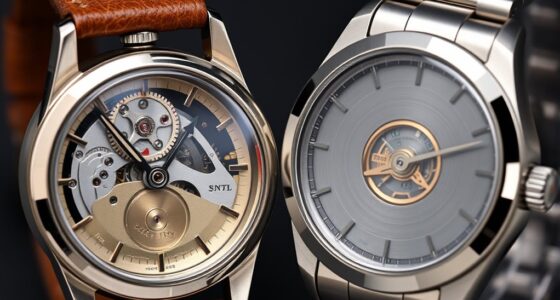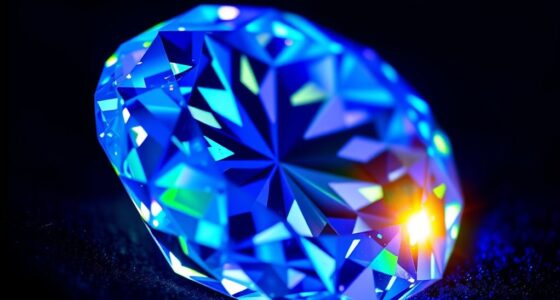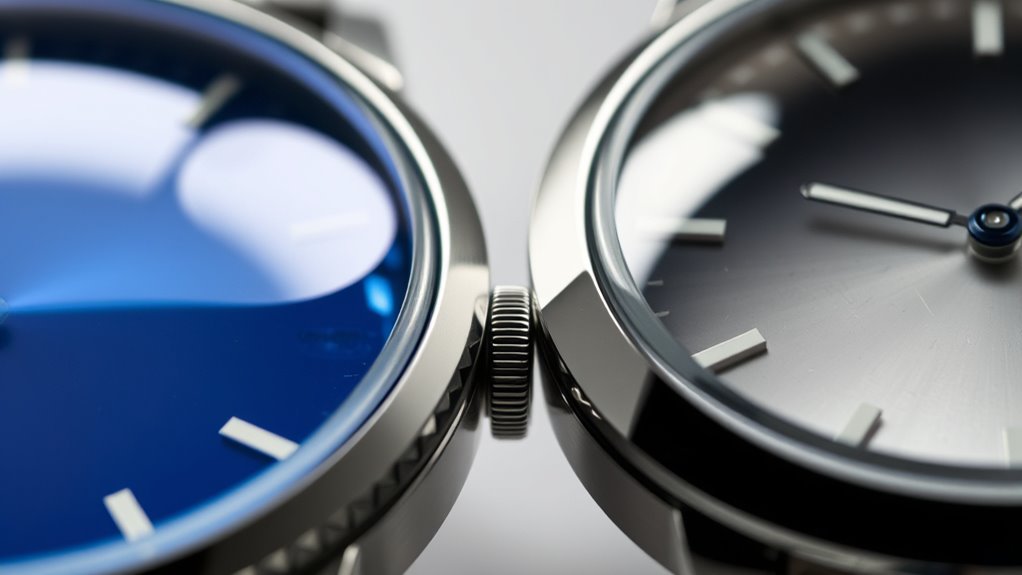
When choosing between sapphire and mineral watch crystals, consider durability, clarity, cost, and maintenance. Sapphire is highly scratch-resistant and offers exceptional transparency, but it’s more expensive and can crack under strong impacts. Mineral glass is more affordable and easier to repair, yet less durable and prone to scratches. Your choice depends on your lifestyle and budget—if you want to learn more about each material’s strengths and weaknesses, keep exploring.
Key Takeaways
- Sapphire crystals are highly scratch-resistant and durable but can crack under strong impacts, while mineral glass is more shattering but easier to repair.
- Sapphire offers exceptional clarity and aesthetic appeal, enhancing watch design, whereas mineral glass provides decent visibility at a lower cost.
- Although initially more expensive, sapphire crystals offer better long-term value due to their durability and resistance to scratches.
- Mineral glass is easier and cheaper to replace or polish if damaged, making maintenance and repairs simpler and more affordable.
- Material choice depends on lifestyle: sapphire suits active wearers needing durability, while mineral glass suits budget-conscious or less risky environments.
Material Composition and Manufacturing Processes
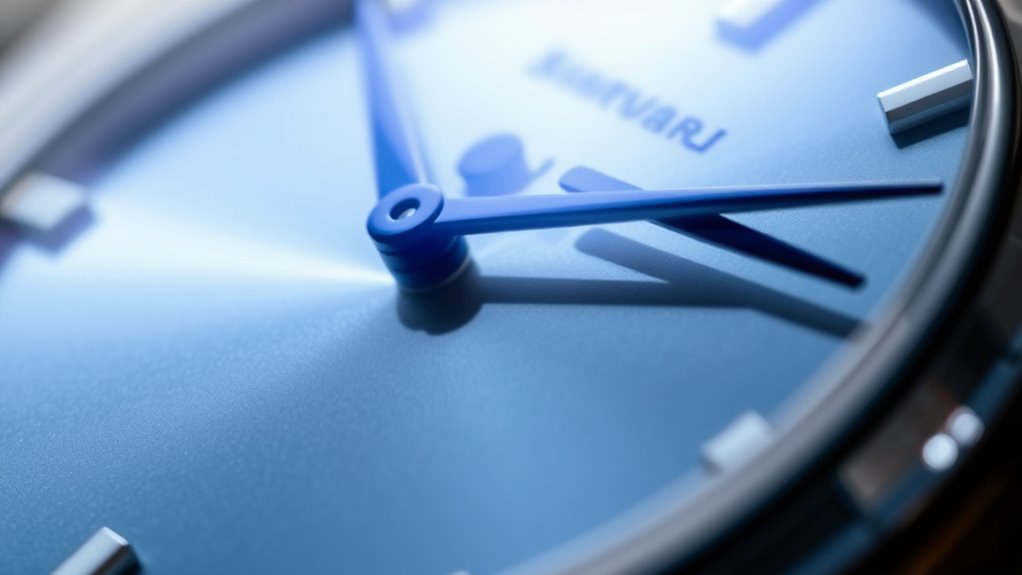
Understanding the material composition and manufacturing processes of crystals is essential because these factors directly influence their clarity, durability, and overall appearance. Your choice depends heavily on manufacturing techniques and material sourcing. For instance, mineral crystals like mineral glass are produced through simple molding and annealing, making them more affordable but less durable. In contrast, sapphire crystals are created via high-pressure, high-temperature (HPHT) processes or Verneuil methods, sourcing high-quality aluminum oxide. These manufacturing techniques guarantee uniformity, strength, and clarity in the final product. The way crystals are sourced—from natural mineral deposits to synthetic production—also impacts their overall quality. manufacturing techniques play a crucial role in determining the final properties of watch crystals. By understanding these processes, you can better appreciate how each crystal’s composition affects its performance and look on your watch. Additionally, advancements in synthetic production methods have allowed for more consistent quality and availability of high-grade sapphire crystals. Moreover, the development of sustainable sourcing practices ensures that high-quality materials are obtained responsibly and ethically.
Durability and Scratch Resistance

When it comes to your watch crystal, durability and scratch resistance are key factors that determine how well it withstands daily wear. Sapphire crystals are highly resistant to scratches, maintaining their clarity over time, but they can crack under strong impacts. Mineral glass offers decent scratch resistance but is more prone to scratches and shattering. Environmental effects like exposure to extreme temperatures or chemicals can also impact durability, affecting readability and longevity. Additionally, smart home technology features like environmental sensors can help monitor conditions that might affect your watch’s material integrity. Proper material selection based on your lifestyle can greatly influence your watch’s longevity. Here’s a quick comparison:
| Feature | Sapphire | Mineral |
|---|---|---|
| Scratch Resistance | Very high | Moderate |
| Impact Resistance | Moderate, can crack | Lower, more shattering |
| Environmental Effects | Resistant to chemicals | Susceptible to damage |
| Readability Impact | Maintains clarity | Can become cloudy |
| Durability | Long-lasting | Less durable |
Clarity and Aesthetic Appeal

Clarity and aesthetic appeal are central to choosing the right watch crystal, as they directly influence how your watch looks and how easily you can read the time. Sapphire crystals offer exceptional transparency, providing a sleek, polished appearance that enhances the watch’s overall design versatility. They allow light to pass through with minimal distortion, making the dial details stand out. Mineral crystals, while slightly less clear, still provide good visibility and a smooth surface. When it comes to color options, sapphire crystals can sometimes be tinted or treated for unique effects, adding a personalized touch to your watch. Ultimately, your choice affects the watch’s visual impact, ensuring it complements your style while maintaining clear readability. Transparency and clarity are key factors that influence the visual appeal of your watch, and understanding material properties can help you select the best crystal for your needs. Additionally, considering scratch resistance can ensure your watch maintains its clarity over time.
Cost and Value Considerations
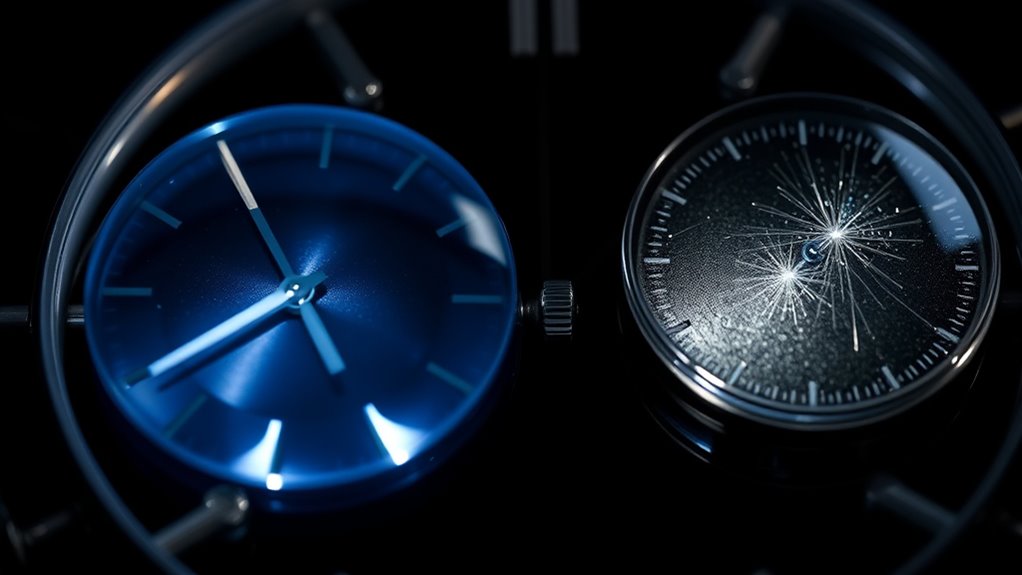
While sapphire crystals offer outstanding durability and clarity, they also come with a higher price tag compared to other options. When considering cost and value, it’s important to think about the initial investment and potential resale value. Sapphire crystals tend to retain their appeal longer, often boosting a watch’s resale value. Additionally, the net worth of individuals associated with watch brands or collectors can influence market prices and desirability. Price comparison shows sapphire is more expensive upfront but may pay off later. Mineral crystals are cheaper but may require more frequent replacements. Resale value for watches with sapphire crystals tends to be higher. Cost considerations depend on your budget and long-term goals. Durability is a key factor that can justify the higher initial cost of sapphire crystals, especially for everyday wear or active lifestyles. Moreover, sapphire’s resistance to scratches and impact damage further enhances its long-term value, reducing the need for costly repairs or replacements over time. The manufacturing process of sapphires adds to their overall durability, making them a preferred choice for many collectors. Additionally, advancements in production techniques continue to improve the quality and accessibility of sapphire crystals. Ultimately, investing in sapphire can be more cost-effective over time if you value durability and resale potential.
Maintenance and Repairability
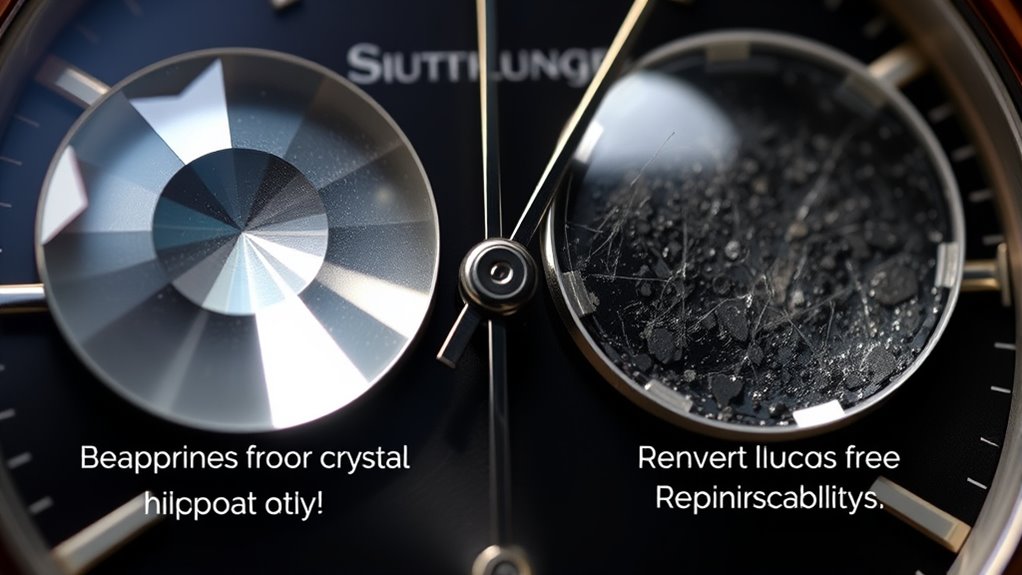
Maintaining and repairing watch crystals depends heavily on the material you choose. For mineral glass, polishing techniques can often restore clarity if it gets scratched, but deep damage usually requires replacement. DIY repair options are more feasible with mineral glass, allowing for some minor fixes at home. When scratches or cracks occur, you’ll need to follow specific replacement procedures tailored to each material. For mineral glass, you might attempt polishing with a specialized compound, but severe damage should be handled by professionals. Impact resistance is a key difference that influences repair strategies for sapphire crystals. Sapphire crystals often require expert replacement, as improper handling can cause further damage. The material properties of sapphire crystals make them more fragile in certain situations, emphasizing the need for professional servicing to maintain your watch’s integrity. Additionally, understanding the wear resistance of each material can help you make informed decisions about handling and maintenance to prolong your watch’s lifespan. Proper care and maintenance can significantly extend the functional life of your watch, especially for delicate sapphire crystals. Overall, mineral glass offers easier DIY repair options, while sapphire’s durability emphasizes professional servicing to maintain your watch’s integrity.
Frequently Asked Questions
How Does the Weight of Sapphire Compare to Mineral Glass?
Sapphire watch crystals are generally heavier than mineral glass because of their higher material density. You’ll notice that sapphire’s weight comparison makes it feel a bit more substantial on your wrist, thanks to its dense, durable nature. Mineral glass, being lighter due to lower density, feels less bulky. If you’re choosing based on weight, keep in mind that sapphire’s added weight reflects its strength and scratch resistance, offering a more premium feel.
Can Mineral Glass Be Treated for Additional Scratch Resistance?
Yes, mineral glass can be treated for additional scratch resistance through special treatment methods like coating or hardening. These treatments create a protective layer that enhances the glass’s durability, making it more resistant to scratches. While it won’t be as scratch-resistant as sapphire, investing in treated mineral glass offers better protection and extends the lifespan of your watch crystal. Always check if the manufacturer applies such treatments for added durability.
Are There Color Options Available for Sapphire and Mineral Watch Crystals?
Yes, both sapphire and mineral watch crystals come in various color options, enhancing their aesthetic versatility. You can find tinted or coated crystals in shades like blue, green, or smoked to match your style. While sapphire offers more advanced color treatments due to its durability, mineral crystals are also customizable, allowing you to choose the perfect look for your watch. This variety helps you personalize your timepiece to suit your preferences.
Which Crystal Type Is More Environmentally Sustainable to Produce?
If you prioritize eco-friendly materials, mineral crystals are more environmentally sustainable to produce. For example, a watch brand adopting sustainable manufacturing might choose mineral crystals because they require less energy and fewer chemicals. Unlike sapphire, which involves high-temperature processes, mineral crystals are made through simpler, eco-friendly methods. By choosing mineral crystals, you support a more sustainable manufacturing process, reducing your watch’s environmental impact and promoting eco-conscious production practices.
How Do Temperature Variations Affect Sapphire Versus Mineral Crystals?
Temperature variations cause sapphire to have lower thermal expansion, making it more stable and durable under temperature changes. You’ll find that sapphire resists cracking or warping better than mineral crystals when exposed to heat or cold. Mineral crystals tend to expand more with temperature fluctuations, which can compromise their durability. So, if you often experience extreme temperatures, sapphire’s better thermal stability guarantees your watch remains protected and intact.
Conclusion
So, whether you fancy the flashy sparkle of sapphire or the humble charm of mineral, remember—your watch’s crystal is basically the eye candy that keeps time. Choose wisely, or you might end up with a scratch magnet or a crystal that shatters at the first bump. Just think: investing in the right material is like choosing your own fashion statement—except it’s on your wrist and can’t be hidden behind sunglasses. Happy watch hunting!