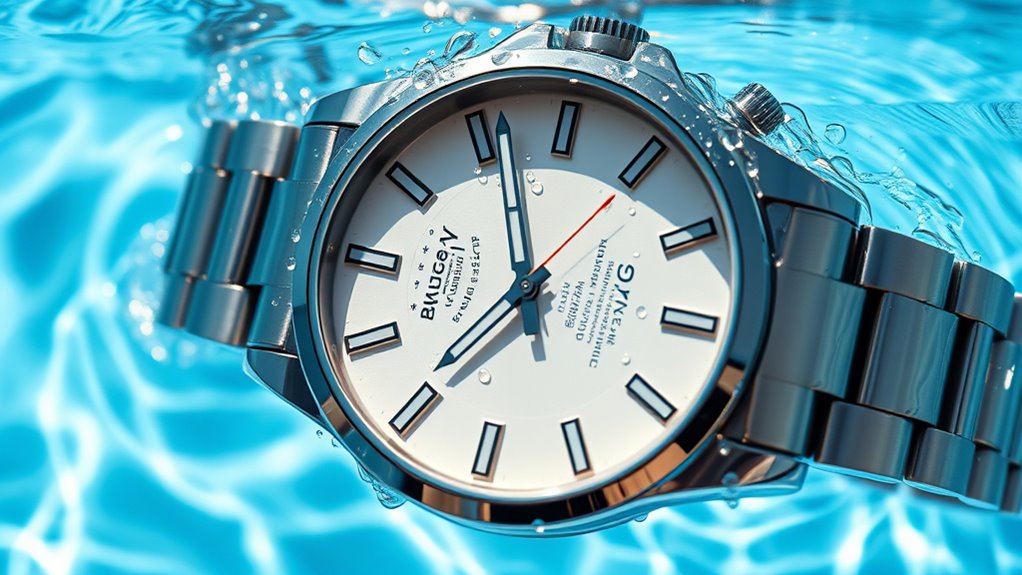

A 3 ATM water resistance rating means your watch can handle splashes, rain, and brief immersions, but it isn’t suitable for swimming or diving. You should avoid exposing it to strong water pressure or submerging it for long periods. Proper care and maintenance are key to keeping its resistance intact over time. If you’d like to learn more about how this rating works and what activities are safe, keep exploring the details below.
Key Takeaways
- 3 ATM indicates the watch can withstand splashes, rain, and brief immersion, but not suitable for swimming or diving.
- It equates to water pressure at 30 meters (100 feet), but testing conditions differ from real-world use.
- Water resistance ratings like 3 ATM are based on standardized tests, but seals may degrade over time.
- Proper maintenance, such as regular gasket checks, is essential to keep the 3 ATM water resistance effective.
- Activities involving prolonged or deep water exposure exceed the protection offered by a 3 ATM rating.
Understanding Water Resistance Ratings and Their Standards
Understanding water resistance ratings and their standards is essential when choosing a watch because these ratings indicate how well a watch can withstand exposure to water. Knowing the ratings helps you assess watch durability during waterproof testing, ensuring it suits your lifestyle. Different standards, like ISO and manufacturer-specific tests, set the benchmarks for water resistance levels. For example, a watch labeled 3 ATM has passed specific waterproof testing to withstand splashes and brief immersions, but not swimming or diving. When evaluating a watch, pay attention to these ratings to determine if it can handle your daily activities or water sports. Clear understanding of these standards prevents surprises and protects your investment, making your choice more confident and informed. Additionally, understanding water resistance ratings can help you select the appropriate gear for water-based activities, ensuring safety and performance. Recognizing the significance of waterproof testing procedures further ensures that you select a watch that meets your specific needs and avoids potential damage. Being aware of testing standards also allows you to compare different watches more effectively, ensuring you choose one that truly meets your water exposure requirements. Moreover, familiarizing yourself with durability benchmarks can aid in selecting a watch that will reliably withstand everyday water encounters.
What Does 3 ATM Indicate in Terms of Water Exposure?

A water resistance rating of 3 ATM means your watch can handle splashes, rain, and brief immersions in water, but it’s not suitable for swimming or diving. This rating is determined through pressure testing, which simulates water exposure at specific depths. It’s important to know the difference between waterproof and water resistant—most watches labeled water resistant are not truly waterproof but can withstand everyday splashes. Additionally, color accuracy plays a role in how well a watch’s display performs under different lighting conditions. The maintenance of water resistance over time is essential, as seals can degrade and reduce effectiveness. Regular inspection and servicing help ensure your watch maintains its water-resistant properties. Understanding electric dirt bikes horsepower can help you choose the right gear for off-road adventures, ensuring your equipment matches your riding style. Maintaining the seals and gaskets in your watch is crucial for preserving its water resistance.
Activities Suitable for a 3 ATM Water-Resistant Watch
Knowing the water resistance rating of 3 ATM helps you determine what activities your watch can handle. With this level, you’re suitable for everyday wear but should avoid intense water exposure. It’s perfect for maintaining your style while staying protected against light splashes or brief immersion. When considering fashion trends, a 3 ATM watch pairs well with casual and semi-formal outfits without risking water damage. To keep your watch looking its best, proper watch maintenance is key, especially if you wear it frequently. Remember, it’s not designed for swimming or diving but handles minor splashes comfortably. For daily activities, a 3 ATM watch offers a good balance of style and durability, ensuring it remains functional and fashionable through your routine.
Common Misconceptions About Water Resistance Levels

Many people believe that a specific water resistance rating means their watch is completely waterproof, but that’s a common misconception. Water resistance and waterproof are not the same; water resistance indicates some protection, not total imperviousness. During water resistance testing, watches are subjected to controlled conditions, but real-world factors can still cause damage. For example, a 3 ATM watch can handle splashes and rain but isn’t suitable for swimming. The table below clarifies common misunderstandings:
| Misconception | Reality | Advice |
|---|---|---|
| Waterproof means fully sealed | Water resistant has limits, not full seal | Know your watch’s rating |
| Water resistance testing is foolproof | Testing has thresholds, not failsafe | Avoid high-pressure water use |
| All water-resistant watches are equal | Ratings vary in protection levels | Check specific rating details |
| Water resistance lasts forever | Gaskets degrade over time | Regular maintenance needed |
| Water resistance applies to all activities | Some activities exceed ratings | Use appropriate protection |
Additionally, proper maintenance of gaskets and seals is essential to ensure ongoing water resistance over time, as gasket integrity can be compromised by regular wear and tear. Routine inspections and replacing worn seals and gaskets can help maintain your watch’s water resistance. Regularly consulting manufacturer guidelines can also extend the lifespan of your watch’s water resistance capabilities.
Tips for Maintaining the Water Resistance of Your Watch
To keep your watch water-resistant over time, regular maintenance is essential. Over time, seals can degrade, affecting water resistance and battery life. Start by replacing the gasket or seal annually or after exposure to harsh conditions. Check your strap materials—leather straps, for example, don’t handle water well and can compromise the watch’s integrity. Waterproof tests by a professional guarantee your watch remains secure against water entry. Additionally, avoid pressing buttons or adjusting crowns underwater, which can compromise seals. Properly maintaining your watch’s water resistance prolongs its lifespan and ensures it stays functional in aquatic environments. Incorporating knowledge about Free Floating technology can also help you understand how modern designs improve water resistance. Regular inspection and care, including understanding Water Resistance Ratings, will help you enjoy your watch’s water resistance for years to come. Being aware of seal integrity and how it impacts water resistance can further guide you in maintaining your watch properly. Furthermore, understanding pressure testing methods can help detect potential issues before they become problematic. For example, some advanced watches utilize pressure sensors to monitor internal conditions and alert owners of potential issues.
Frequently Asked Questions
How Often Should I Have My Water-Resistant Watch Tested?
You should have your water-resistant watch tested annually to guarantee water resistance maintenance. Regular watch testing helps identify any potential issues with seals or gaskets that might compromise water resistance over time. If you frequently expose your watch to water or experience impacts, consider more frequent testing. Proper maintenance not only prolongs your watch’s lifespan but also keeps it safe during water activities, giving you peace of mind.
Can a Watch’s Water Resistance Decrease Over Time?
Think of your watch like a loyal friend—over time, even the strongest bonds can weaken. Yes, water resistance can decline due to wear, aging seals, or accidental impacts. Regular maintenance helps prevent water resistance decline and keeps your watch performing its best. Don’t wait for signs of trouble; routine checks ensure your timepiece remains reliable, so you can enjoy it without worries, just like trusting a good friend.
What Factors Can Damage a Watch’s Water Resistance?
You can damage your watch’s water resistance through seal degradation and pressure changes. Over time, the seals that keep water out can wear out or crack, making the watch vulnerable. Sudden pressure changes, like rapid altitude shifts or deep diving, also stress the seals and can compromise water resistance. To protect it, avoid exposing your watch to extreme conditions and have the seals checked regularly by a professional.
Are There Specific Brands Known for Better Water Resistance?
Some brands, like Rolex, Seiko, and Citizen, are known for better water resistance due to their strong brand reputation and rigorous testing procedures. You can trust these brands to meet high standards for water resistance, often exceeding basic ratings. When choosing a watch, look for those with documented testing procedures and solid reputations, ensuring your watch withstands water exposure better than average.
How Does Temperature Affect a Watch’s Water Resistance?
Sure, temperature effects can surprise you—hot or cold environments might just test your watch’s durability. When you expose your watch to extreme temps, the seals can expand or contract, making water resistance less effective. So, if you’re swimming in icy lakes or basking in scorching sun, know that temperature effects could compromise your watch’s water resistance, risking damage where you least expect it. Stay mindful of the climate!
Conclusion
Now that you know what 3 ATM really means, you can make smarter choices about your watch’s water exposure. Remember, it’s not designed for swimming or diving—so why risk damage? Stay mindful of its limits, keep the seals intact, and enjoy your watch without worry. After all, isn’t it worth protecting your investment so it keeps ticking for years to come?