
A watch winder can be useful if you own multiple automatic watches or don’t wear them daily, as it keeps them wound and ready to go. If you wear your watches every day, a winder isn’t necessary because your wrist movement keeps them powered. However, if your collection sits unused for long periods, winders save you time and hassle. Curious about whether it’s worth it for you? Keep exploring to find out more.
Key Takeaways
- Watch winders are useful for automatic watches that are worn infrequently, keeping them wound and ready to wear.
- They are unnecessary for daily wearers, as regular wrist movement keeps watches wound naturally.
- Winders help maintain complex watches with features like perpetual calendars, preventing timing issues.
- They do not replace manual winding for vintage or hand-wound watches, which require manual intervention.
- Proper storage and maintenance are essential; winders are a convenience, not a mandatory necessity.
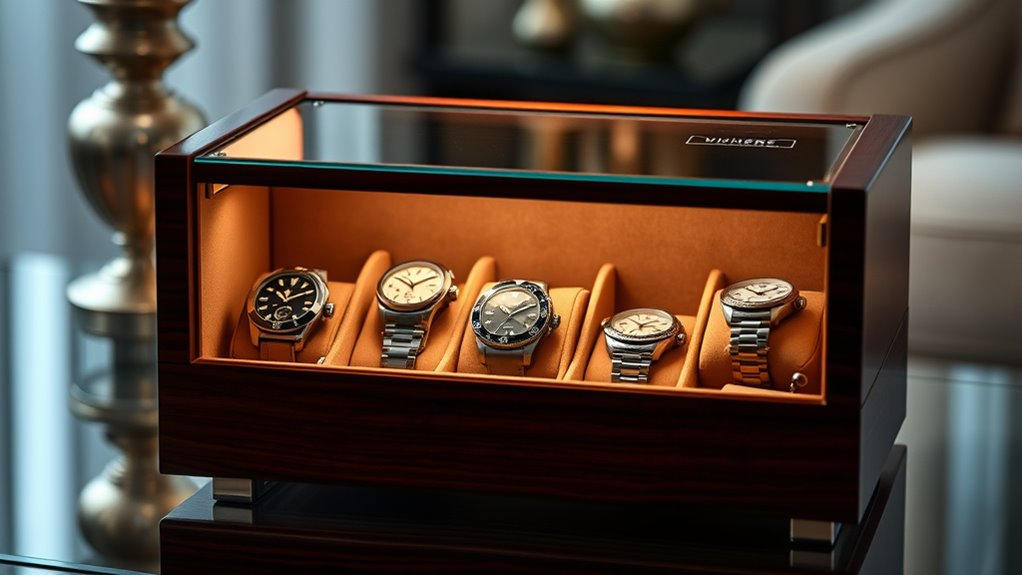
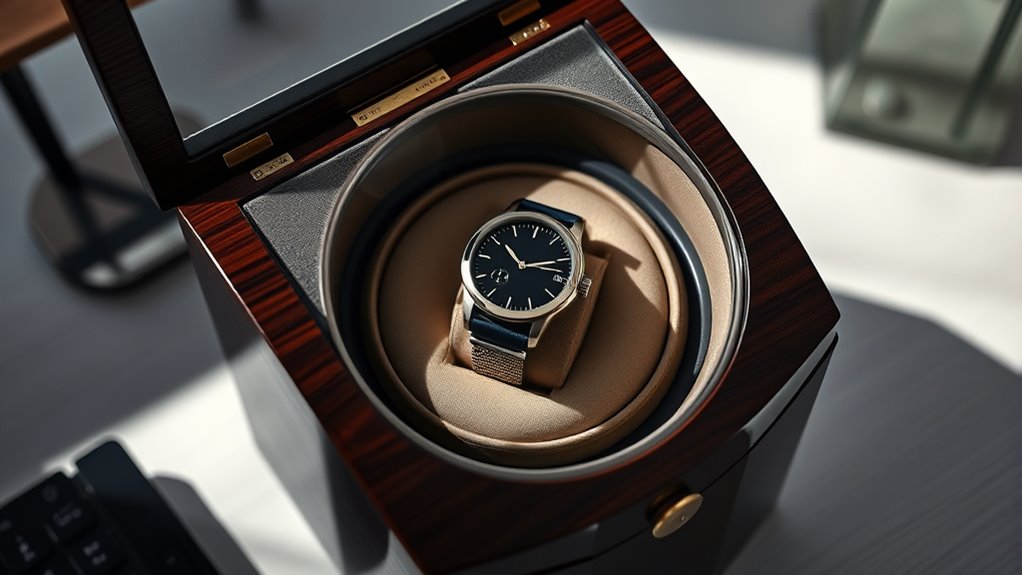
Ever wondered how to keep your automatic watches running smoothly when you’re not wearing them? If you own one, you’ve probably noticed that they need regular movement to stay accurate and functional. That’s where a watch winder comes into play. A watch winder is a device designed to keep automatic watches wound when you’re not wearing them. It mimics the natural motion of your wrist, ensuring the internal gears stay engaged. But do you really need one? The answer depends on your collection and how often you wear your watches.
Automatic winding is a fascinating feature that allows your watch to generate power through the natural motion of your wrist. When you wear your watch daily, the movement of your arm keeps it wound and running accurately. However, if you have multiple watches or only wear certain pieces occasionally, they can stop running if they’re not kept active. That’s where a watch winder can be a real convenience. It keeps your automatic watches wound, so you won’t have to reset the time or date every time you pick one up after a break. This is especially true for watches with complex functions like perpetual calendars or moon phases, which are time-consuming to reset.
Manual winding is another method to keep your watch running, and it’s often overlooked. Many automatic watches can also be wound manually by turning the crown. This is useful if your watch has stopped or if you prefer to wind it periodically without wearing it. A watch winder can assist with this by providing a consistent, gentle rotation, ensuring your watch stays wound without the need for daily manual winding. Some winders even have settings that allow you to choose the direction and number of turns, making manual winding more convenient.
Deciding if you need a watch winder depends on your lifestyle. If you only wear your watch once a week, it might be worth investing in one. It saves you time and hassle, especially with watches that are difficult to reset or have intricate functions. On the other hand, if you wear your watch daily, a winder might be unnecessary because your wrist movement does the automatic winding for you. Additionally, if you own vintage or hand-wound watches, a winder won’t do much good—they require manual winding to stay operational. Properly maintaining your watches with safe storage practices can also help prolong their lifespan and accuracy.
In the end, a watch winder is a useful tool for automatics, especially for collectors or those with multiple watches. It complements automatic winding and manual winding, ensuring your watches stay ready to wear whenever you want. Whether you need one depends on your habits and collection size, but it’s definitely worth considering if you want to keep your watches in ideal condition with minimal fuss.
Frequently Asked Questions
Can Watch Winders Damage Automatic Watches?
Watch winders can potentially damage automatic watches if used improperly. Constant automatic winding might wear out components faster, especially if the watch isn’t designed for continuous motion. However, if you use a winder that mimics natural wrist movements and respects your watch’s power reserve, it minimizes risks. The key is to choose a high-quality winder that allows you to set rotation and rest periods, helping preserve your watch’s longevity.
Are Watch Winders Suitable for All Types of Watches?
Not all watches are suitable for watch winders. You need to check watch winder compatibility with your specific watch type, especially for vintage or manual pieces. Many modern automatic watches benefit from watch winder features, but some may be harmed if the winder isn’t designed for their movement or has incorrect settings. Always read the manufacturer’s instructions to ensure your watch’s safety and performance before using a watch winder.
How Do I Choose the Right Watch Winder Size?
You should choose a watch winder size based on your collection and watch types. For a few watches, a smaller, single-watch winder works well, while larger collections need multi-watch winders. Consider your watch storage options, ensuring the winder fits your space and protects your watches. Check the watch winder types to find one with adjustable settings suitable for your specific watches, ensuring they stay wound and in good condition.
Do Watch Winders Require Regular Maintenance?
Think of your watch winder as a tiny engine that needs occasional care. It doesn’t require much maintenance; just keep an eye on its noise levels and power consumption. If it gets loud or uses too much energy, check for dust or loose parts. Regularly cleaning and ensuring smooth operation helps prevent wear and tear, keeping your winder running quietly and efficiently—like a well-oiled machine that rewards your attention.
Are Expensive Watch Winders Worth the Investment?
Expensive watch winders can be worth the investment if you own automatic watches and want to guarantee their safety and longevity. While watch winder costs vary, higher-quality models often provide better protection and consistent movement, preventing potential damage from manual winding errors. If you value your collection and prefer convenience, paying more for a reliable watch winder makes sense, as it safeguards your watches and maintains their accuracy effortlessly.
Conclusion
In the end, whether you need a watch winder is like deciding if you chase rainbows—you might, or you might not, but the choice is yours. If you value your timepieces and want them to stay ready, a winder can be your loyal companion, much like a steady lighthouse guiding ships through fog. Remember, sometimes the simplest choices keep your treasures ticking smoothly, ensuring your wrist’s story continues without interruption.