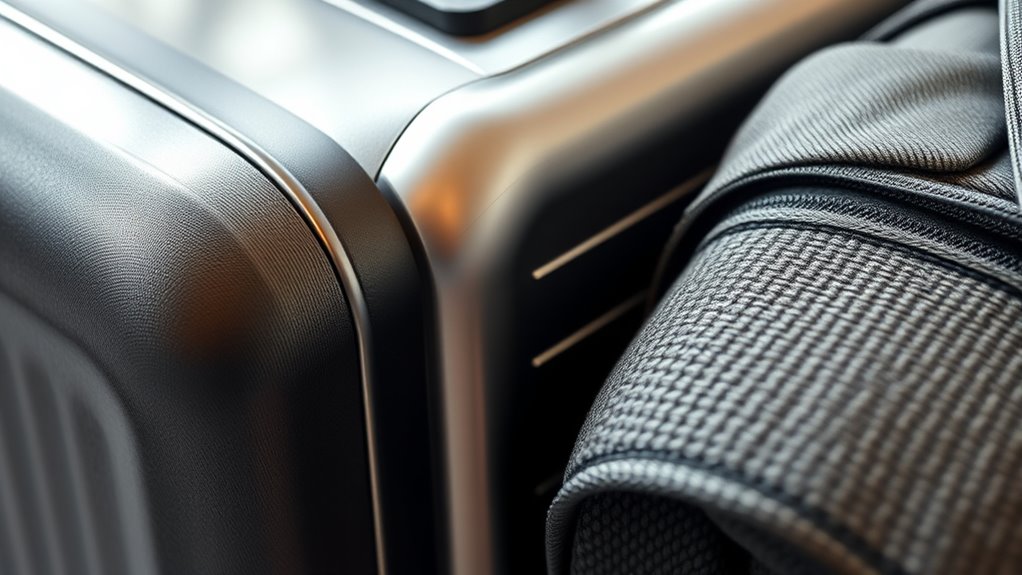

When choosing luggage materials, consider polycarbonate for a lightweight, impact-resistant option that absorbs shocks well but may scratch easier. Aluminum offers exceptional durability and style, ideal if you prioritize ruggedness despite the added weight. Fabric luggage is lightweight, flexible, and easier to pack or repair, making it great for convenience. Each material has its strengths, so continue to discover which fits your travel needs best.
Key Takeaways
- Polycarbonate luggage is lightweight with good impact resistance but more prone to scratches than aluminum.
- Aluminum luggage offers superior durability and impact resistance, ideal for rough handling but is heavier.
- Fabric luggage is lightweight and flexible, making it easy to pack, but less impact-resistant than polycarbonate and aluminum.
- Polycarbonate balances resilience and weight, absorbing shocks without cracking.
- Aluminum provides high protection and a sleek appearance, suitable for travelers prioritizing durability over weight.

Are you wondering what makes some luggage more durable and lightweight than others? The materials used in your suitcase play a vital role in determining both its impact on travel weight and its durability comparison. Different materials have unique strengths and weaknesses, which can influence how well your luggage withstands the rigors of travel and how easy it is to carry around airport terminals and city streets. Understanding these differences helps you pick a piece that balances weight, strength, and practicality. Polycarbonate is a popular choice if you’re looking for lightweight yet sturdy luggage. It’s known for its high impact resistance, meaning it can absorb shocks and bumps without cracking or breaking. This impact on travel weight is significant because polycarbonate suitcases tend to be lighter than alternatives like aluminum, making them ideal for travelers who want to avoid excess baggage fees and reduce strain on their arms. When comparing durability, polycarbonate often holds up well under typical travel conditions, offering a good balance of resilience and lightweight design. It’s less prone to denting than aluminum, though it might scratch more easily if you’re not careful. Overall, polycarbonate provides a reliable, lightweight option that doesn’t compromise too much on durability. Aluminum luggage, on the other hand, is celebrated for its exceptional durability comparison. It’s the heavy-duty choice for travelers who need their luggage to withstand rough handling, such as frequent flyers or those setting out on rugged adventures. Aluminum cases are incredibly strong and resistant to impacts, often outperforming polycarbonate in terms of sheer durability. However, this strength comes with a downside: increased weight. The impact on travel weight with aluminum is significant because these cases tend to be heavier, which could lead to higher baggage fees or more effort when lifting and maneuvering. Despite being heavier, aluminum offers a sleek, stylish look and superior protection for your belongings, making it a top pick for those who prioritize durability above all else. Fabric luggage, typically made from nylon or polyester, offers a different set of advantages. It’s usually lightweight, which positively influences travel weight, especially for soft-sided bags that don’t add bulk. Although fabric luggage isn’t as impact-resistant as polycarbonate or aluminum, it’s often more flexible and easier to pack into tight spaces. Durability comparison varies depending on the quality of the fabric; high-denier nylon, for example, can be highly resistant to tears and abrasions, making it suitable for rugged travel conditions. Fabric suitcases are also easier to repair if damaged and tend to be more forgiving during rough handling. They might not provide the same level of impact protection, but their lightweight nature and flexibility make them popular among travelers who prioritize ease of handling and convenience. Additionally, advances in material technology have improved the durability and weather resistance of fabric luggage, making them a viable option for many travelers.
Frequently Asked Questions
Which Luggage Material Is Most Environmentally Sustainable?
You’ll find fabric luggage often more environmentally sustainable since it’s typically produced with sustainable methods and uses eco-friendly recycling processes. Compared to polycarbonate and aluminum, fabric options usually have a lower carbon footprint, especially if made from recycled or organic materials. By choosing fabric, you support sustainable production practices and encourage eco-conscious recycling, making it a smarter choice for travelers who care about reducing environmental impact.
How Does Luggage Material Affect Weight Restrictions?
Your luggage material can dramatically impact weight restrictions, like a heavyweight champion in your travel plans. Lightweight options like fabric or polycarbonate help you maximize your weight limit impact, letting you pack more without exceeding restrictions. Material flexibility also plays a role—softer fabrics often weigh less and bend easily, while rigid aluminum or polycarbonate can add weight but offer extra durability. Choose wisely to stay within limits and avoid fees.
Are There Any Health Concerns With Certain Materials?
You might worry about material toxicity or allergenic reactions when choosing luggage. Generally, polycarbonate and aluminum are safe and non-toxic, but some fabrics may contain dyes or chemicals that could trigger allergies. If you have sensitive skin or allergies, opt for luggage made from hypoallergenic materials or make certain the fabric is free from harmful chemicals. Always check product labels for safety information to avoid potential health concerns.
Can Luggage Materials Be Repaired Easily?
Yes, luggage materials vary in repairability. Polycarbonate and fabric suitcases often have repair options like patching or replacing zippers, but may crack over time. Aluminum cases are more durable but can be dented, sometimes requiring professional repair. Durability considerations matter, so choose materials that match your travel habits. For easy repairs, fabric and polycarbonate luggage are generally more accessible, while aluminum might need specialized repair services.
How Do Luggage Materials Perform in Extreme Weather Conditions?
Imagine your luggage as a sturdy shield against harsh weather. Polycarbonate offers great durability testing, resisting impacts and thermal insulation, making it perfect for extreme cold or heat. Aluminum withstands high temperatures well but can dent in cold weather, while fabric luggage may struggle with thermal insulation, risking damage. In extreme conditions, choose polycarbonate for reliable performance, knowing it’s built to handle the toughest environments.
Conclusion
When choosing your luggage material, think about your travel style. For instance, if you’re a frequent flyer, lightweight polycarbonate might be perfect for easy handling. Imagine a traveler who switched to aluminum for durability and ended up saving money on replacements. Ultimately, selecting the right material guarantees your belongings stay safe and your journeys smooth. So, consider your needs carefully—you’ll thank yourself on your next adventure!