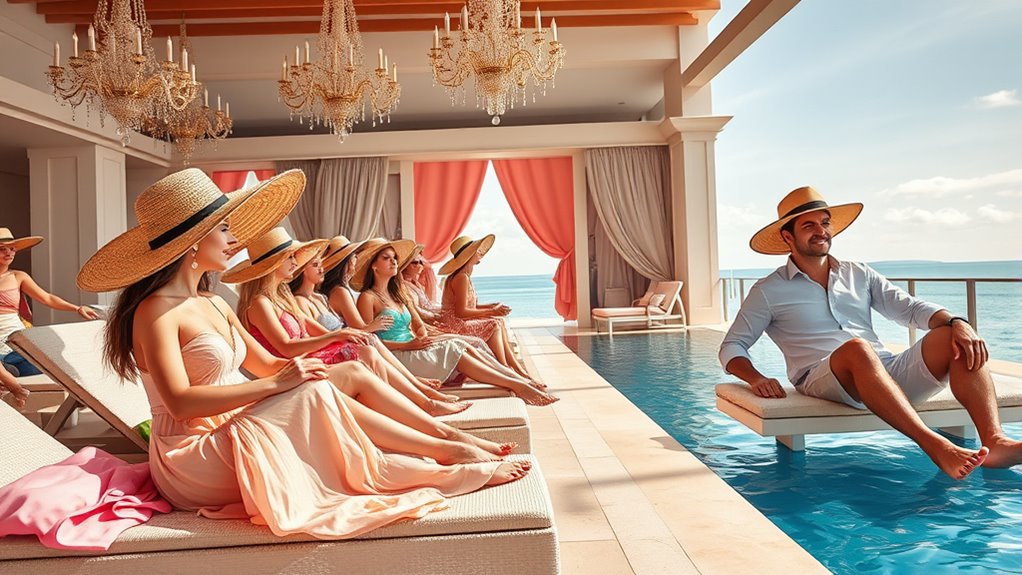

When visiting a resort, your attire depends on the venue. For beach clubs, opt for casual, comfortable swimwear, cover-ups, and flip-flops, but remember to follow rules about appropriate cover-ups. In contrast, ballrooms or formal dinners require upscale outfits like cocktail dresses or suits, often with resort chic accessories. Knowing the specific dress code for each location ensures you look suitable and feel confident. Keep exploring to discover tips on shifting your style from day to night seamlessly.
Key Takeaways
- Dress codes vary from casual beachwear at pools and outdoor areas to more refined attire for dining and events.
- Daytime resort attire typically includes neat shorts, sundresses, and flip-flops; evening wear shifts to smart-casual or resort chic.
- Formal events or ballrooms require sophisticated clothing such as cocktail dresses, evening gowns, or blazers.
- Always check resort policies or consult staff to ensure your outfit aligns with specific dress code expectations.
- Proper dressing demonstrates respect for resort standards and enhances the overall guest experience.
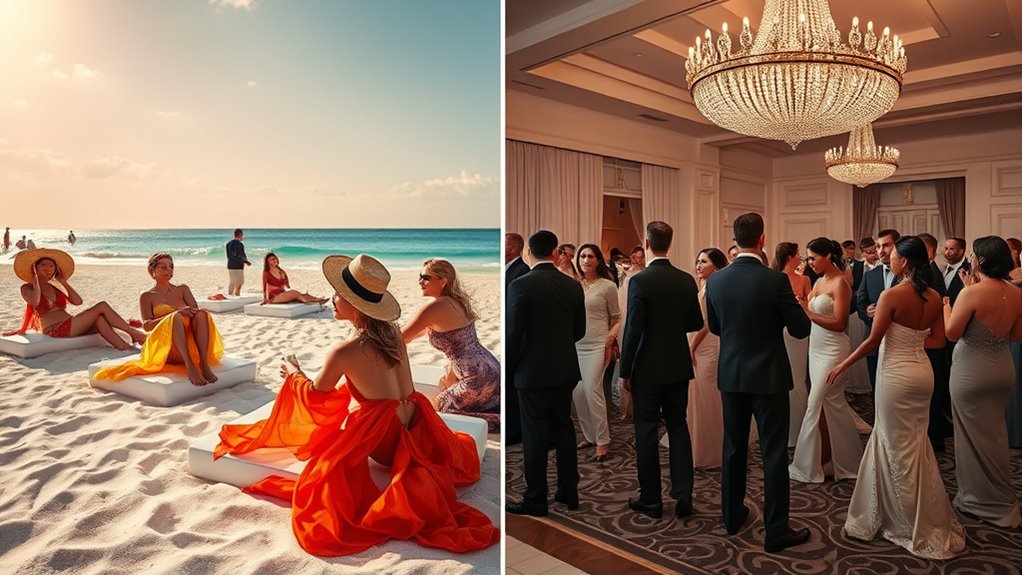
When visiting a resort, understanding the dress code is crucial to make certain you’re appropriately dressed for every occasion. Resorts often have specific expectations, whether you’re lounging by the pool, dining in a fine restaurant, or attending evening events. Knowing what constitutes luxury resort attire versus casual vacation wear can help you avoid feeling out of place or underdressed. For daytime activities, casual vacation wear is usually acceptable—think lightweight shorts, sundresses, tank tops, and flip-flops. These outfits keep you comfortable in the sun and are perfect for relaxed poolside lounging or exploring the resort grounds. However, even casual attire should be neat and polished; wrinkled or torn clothing can give the wrong impression.
Casual vacation wear is fine during the day, but keep it neat and polished for the best impression.
As you shift from daytime to evening, the dress code often evolves. Many resorts request guests to upgrade their casual vacation wear to more refined attire for dinner or special events. For men, this might mean slipping into a collared shirt and clean shorts or lightweight trousers, paired with loafers or closed-toe sandals. Women might opt for a sundress or a chic top with a skirt or tailored pants. While these outfits are still casual, they elevate your look to meet the expectations of resort dining venues, especially those that are more upscale. Remember, resort dress codes tend to lean towards the smart-casual side, so avoid overly revealing or gym wear, which is usually inappropriate.
When it comes to luxury resort attire, especially for evening events, the standards are more elevated. For men, this could mean wearing a blazer or sport coat with dress slacks, and for women, a cocktail dress or elegant evening gown. Some resorts might specify “resort chic” or “beach formal,” meaning you should dress up without going overboard. Pack versatile pieces that can be layered or styled differently, helping you transition smoothly from daytime leisure to elegant evening outings. If the resort features a ballroom or formal event, don’t hesitate to bring along a dressier outfit or tuxedo. It’s better to be slightly overdressed than underdressed in these settings. Additionally, many resorts now incorporate dress code guidelines to help guests navigate their attire choices more confidently.
Ultimately, respecting the resort’s dress code enhances your experience and shows consideration for fellow guests and staff. When in doubt, check the resort’s guidelines ahead of time or ask the concierge for advice. Packing a mix of casual vacation wear and sophisticated resort attire ensures you’re prepared for any occasion, allowing you to enjoy your stay without worry or embarrassment. By understanding these distinctions, you can fully embrace your vacation, looking stylish and feeling comfortable every step of the way.
Frequently Asked Questions
Are Children Required to Follow the Same Dress Codes?
Children are generally expected to follow the same dress codes as adults, but many resorts have family dress policies that allow more casual or age-appropriate attire. You should check specific rules before visiting, since some places require children’s attire to be neat and respectful of the setting. By adhering to these policies, your family can enjoy the resort comfortably and without issues, ensuring everyone looks appropriate for the venue.
Can Guests Wear Flip-Flops in Upscale Restaurants?
You might be surprised, but yes, some upscale restaurants do allow flip-flops, especially if they’re stylish or part of casual attire. However, it’s always best to check the footwear guidelines first. While flip-flops can be comfy, many upscale spots prefer closed-toe shoes or dressier options. To avoid any surprises and stay within dress code expectations, consider packing a pair of polished shoes for dinner, just in case.
How Strict Are Resort Dress Code Enforcement Policies?
You’ll find that resort dress code enforcement policies vary, but they’re generally quite strict, especially in upscale venues. You’re expected to adhere to cultural dress norms and avoid casual attire like flip-flops or shorts in fine dining areas. It’s best to check specific resort guidelines beforehand, so you can dress appropriately and avoid any issues. Respecting these policies ensures you enjoy a seamless, stylish experience without feeling out of place.
Are There Specific Dress Codes for Spa and Pool Areas?
Spa and pool areas typically have specific standards to keep things comfortable and classy. You should wear resort spa attire, which often includes swimsuits, cover-ups, and sandals, while poolside clothing standards emphasize modesty and practicality. Expect to see guidelines that encourage easy, breezy dressing without overexposure. Follow these policies to enjoy the area without hassle, ensuring a harmonious, relaxing retreat for everyone.
What Are the Dress Code Differences Between Day and Evening?
During the day, you can wear casual attire like swimsuits, cover-ups, or shorts at the resort. In contrast, evening dress codes typically require more formal wear, such as cocktail dresses or dress shirts and slacks. You should always check specific resort policies, but generally, daytime is relaxed and casual, while nights call for a polished, more sophisticated look to match the setting and events.
Conclusion
Ultimately, understanding resort dress codes is like mastering a secret language that unlocks elegance wherever you go. Whether you’re lounging by the pool or dancing in a ballroom, dressing appropriately transforms the experience into a seamless dance of style and sophistication. When you respect the guidelines, you’re not just fitting in—you’re setting the rhythm for unforgettable moments. Embrace the dress code as your compass, guiding you through the elegant symphony of resort life.