To conserve posters at home, use acid-free materials like mounting boards, sleeves, and pH-neutral storage boxes to prevent damage. Handle them carefully by the edges and keep them out of direct sunlight with UV-protective glass or acrylic when framing. Maintain a stable environment with controlled temperature and humidity, and clean gently with soft tools. Regular checks help catch problems early, and for more in-depth tips, you’ll find all you need here.
Key Takeaways
- Use acid-free adhesives, mats, and storage materials to prevent deterioration and acid damage.
- Handle posters by the edges and avoid direct sunlight to minimize physical and light-related damage.
- Store posters flat in acid-free folders or boxes, and keep environments cool, dry, and well-ventilated.
- Frame posters with UV-protective glass or acrylic and acid-free backing for added protection.
- Regularly monitor environmental conditions and inspect posters for signs of fading, mold, or pests.

Golden State Art, Archival Storage Box, Acid-Free Drop Front Museum Box with Metal Edge for Storing Artwork Photos Documents Prints Arts And Crafts (Gray-20.75×24.75×3 Inches)
Premium Material: Our photos organizers are made of acid-free, lignin-free archival quality with 60 point board, which is…
As an affiliate, we earn on qualifying purchases.
As an affiliate, we earn on qualifying purchases.
Choosing the Right Materials for Poster Preservation
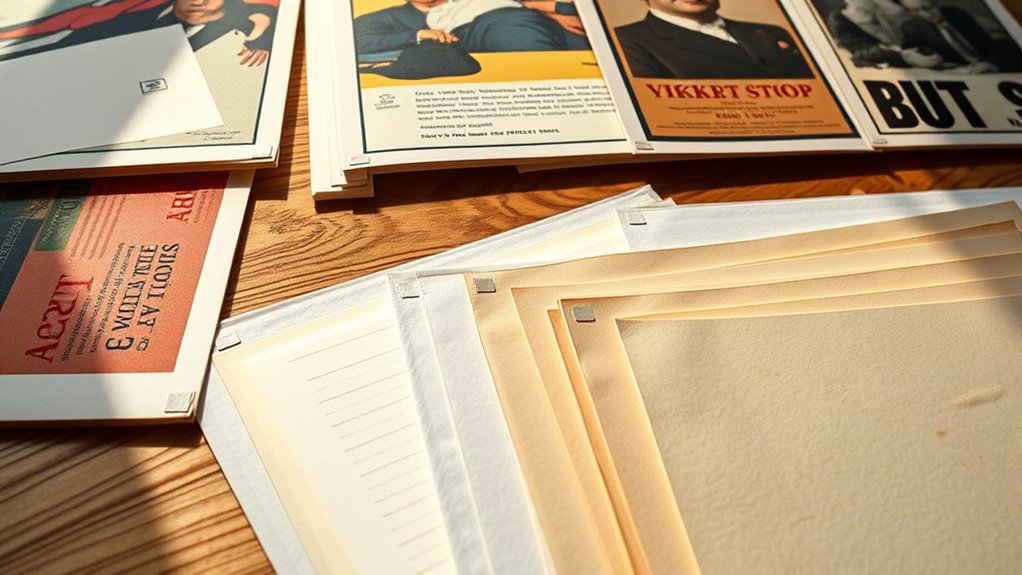
When it comes to preserving posters at home, choosing the right materials is essential to guaranteeing their longevity. You should always opt for acid free adhesives, which prevent deterioration and yellowing over time. Regular glue or tape can cause damage, so these specialized adhesives are a safer choice. Additionally, consider archival quality storage solutions, such as acid-free sleeves or storage boxes, to protect your posters from environmental damage like humidity and light exposure. Using proper materials helps maintain the poster’s integrity without risking chemical reactions that can weaken paper fibers. Always check labels to confirm materials are acid free and archival quality. Incorporating proper framing techniques can also enhance the preservation process by providing additional physical support and protection. Selecting acid-free mounting boards further ensures that the poster remains unaffected by harmful acids. Understanding UV-protective glass options can help prevent fading caused by light exposure over time. Using archival storage methods such as climate-controlled environments can significantly extend the lifespan of your posters. Investing in these materials ensures your posters stay vibrant and intact for years to come.
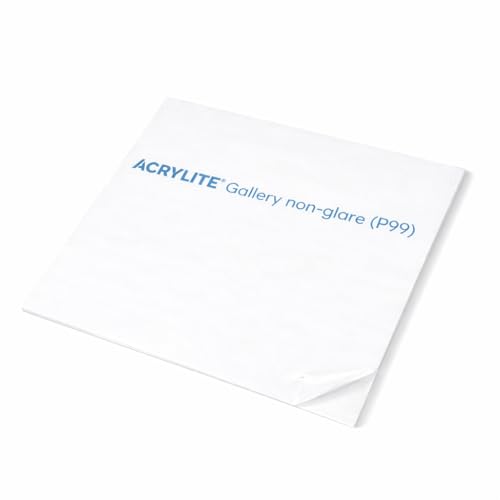
Acrylic Glass Shatterproof 99% UV Protected Conservation Clear OP3 Premium Framing Grade Display For Picture Frame (8 x 10)
Lightweight: Features a lightweight design that makes handling and installation easier compared to traditional glass
As an affiliate, we earn on qualifying purchases.
As an affiliate, we earn on qualifying purchases.
Proper Handling and Display Techniques
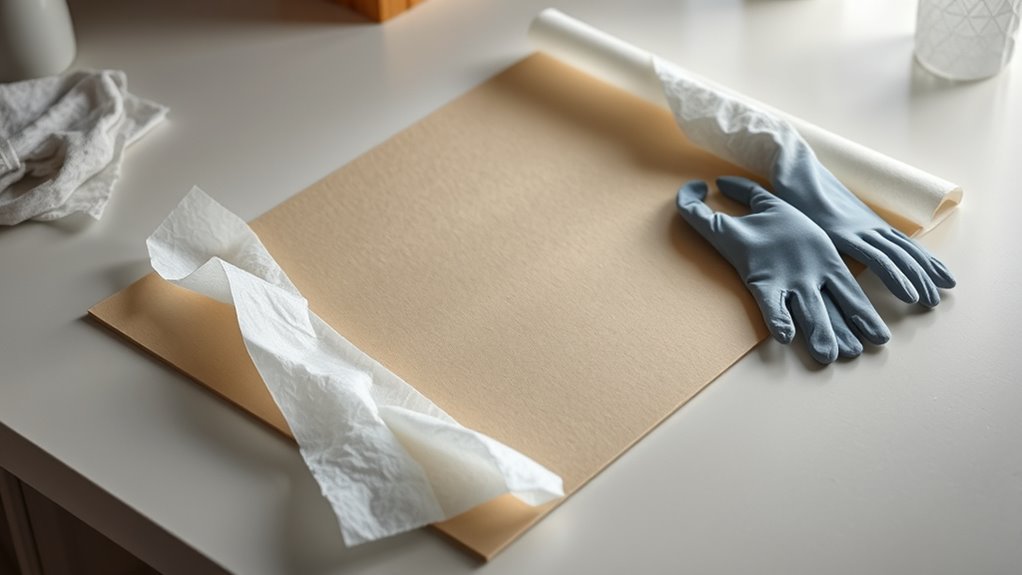
To preserve your posters effectively, handling them with care is vital. Always handle posters by the edges to avoid fingerprints and tears. When displaying, choose framing techniques that provide proper support and prevent damage. Use UV-filtering glass or acrylic to protect against light damage, and avoid direct sunlight. Proper display lighting is essential; opt for soft, indirect light to reduce fading. Confirm your posters are mounted securely without adhesives that can cause deterioration. Consider using acid-free mats and backing for added protection. Additionally, managing thermal behavior during display can help prevent warping or damage over time. Incorporating free floating display methods can also minimize contact with mounting materials and further safeguard your posters.

Mat Board Center, Pack of 10 Acid-Free Foam Boards, 11×14 inch White Foam Boards, 1/8" Thick
Pack of 10, 11×14 inches foam core boards
As an affiliate, we earn on qualifying purchases.
As an affiliate, we earn on qualifying purchases.
Cleaning and Dusting Your Posters Safely
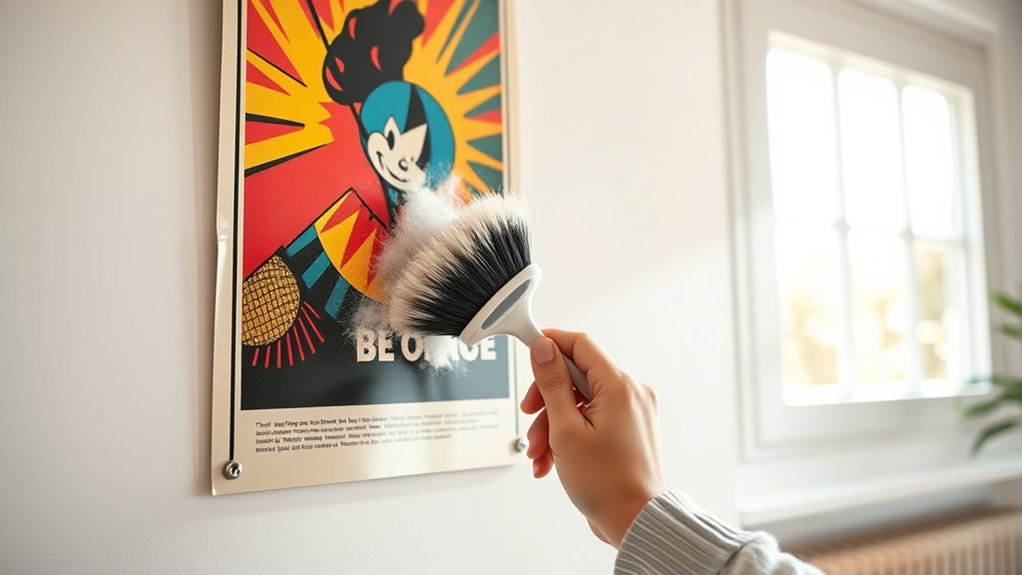
To clean your posters safely, start by using gentle dust removal techniques like a soft brush or a microfiber cloth. Make sure you choose appropriate cleaning materials that won’t damage the paper or ink, and handle your posters with care. Proper storage tips, such as keeping posters in a dust-free environment, will also help maintain their condition over time. Additionally, understanding the importance of conservation techniques can help you appreciate the unique value of your posters and preserve their significance. Incorporating proper environmental conditions like stable temperature and humidity levels can further prevent deterioration and extend the lifespan of your posters. Moreover, being aware of regulatory changes can inform you about best practices for preservation and prevent accidental damage. Staying informed about archival standards ensures your posters are kept in optimal conditions for long-term preservation.
Gentle Dust Removal Techniques
Dust can quickly accumulate on posters, but cleaning them carefully is essential to prevent damage. Use gentle brush techniques, such as a soft-bristled brush or a clean, dry paintbrush, to carefully remove surface dust without scraping or tearing the paper. Avoid pressing too hard, and work in light, sweeping strokes. Microfiber cloth methods are also effective; gently wipe the poster’s surface with a slightly damp microfiber cloth, ensuring it’s just barely moist to avoid water damage. Always test a small area first. Keep your movements light and deliberate to prevent creases or tears. Regular, gentle dust removal helps preserve your posters’ appearance and integrity over time. Remember, patience and softness are key to cleaning posters safely at home.
Appropriate Cleaning Materials
Choosing the right cleaning materials is essential for maintaining your posters without causing damage. You should avoid harsh chemicals and artificial cleaning products that can harm delicate surfaces. Instead, opt for gentle, archival-safe options. Use a soft, lint-free cloth or a microfiber cloth to remove dust and dirt carefully. When dealing with stains, avoid chemical solutions that contain alcohol or solvents, which can deteriorate paper and ink. Instead, consider distilled water or specialized archival cleaners. Always test any cleaning method on a small, inconspicuous area first. Remember, gentle cleaning preserves your poster’s integrity. Keep your cleaning materials simple and free of unnecessary additives. Proper selection of cleaning supplies ensures your posters stay vibrant and intact for years to come.
Handling and Storage Tips
Handling and storing your posters properly is key to preserving their condition over time. When cleaning or dusting, use gentle techniques to avoid damaging the surface. Confirm your lighting considerations prevent fading; avoid direct sunlight and strong artificial light. Framing techniques also matter—use acid-free mats and UV-protective glass to shield posters from environmental damage. To keep posters safe, store them flat in a cool, dry place, away from humidity and temperature fluctuations. Here’s a quick reference:
| Tip | Description | Why It Helps |
|---|---|---|
| Use soft brushes | Gently remove dust without scratching | Prevents surface damage |
| Avoid direct sunlight | Keep posters out of bright light | Prevents fading |
| Frame with UV glass | Protects from harmful light exposure | Preserves colors and paper integrity |
| Store flat | Prevents creases or bends | Maintains flat condition |
| Maintain stable environment | Keep in cool, dry space | Reduces deterioration |

MagicWater Supply Mailing Tube – 1.5 in x 12 in – Kraft – 2 Pack – for Shipping and Storage of Posters, Arts, Crafts, and Documents
Protects Against Damage – Our 2 Pack of Kraft mailing tubes provides a sturdy protection for your important…
As an affiliate, we earn on qualifying purchases.
As an affiliate, we earn on qualifying purchases.
Optimal Storage Conditions for Longevity

To guarantee your posters last as long as possible, maintaining the right storage conditions is essential. Climate control helps stabilize temperature and light exposure, preventing deterioration. Humidity regulation is equally important, as excessive moisture can cause mold, warping, or sticking. Keep storage areas cool, ideally between 65-70°F, and avoid fluctuations. Use dehumidifiers or silica gel packs to control moisture levels. Store posters flat in acid-free folders or boxes to prevent bending. Avoid direct sunlight, which can fade colors. Proper climate management and ventilation considerations ensure your posters remain vibrant and structurally sound over time. Ensuring proper air circulation can help prevent mold and maintain optimal storage conditions. Regularly monitor conditions to catch any issues early. Implementing consistent environmental controls helps create an environment that preserves your posters’ vibrant colors and structural integrity over time.
Framing and Mounting Options to Protect Your Posters
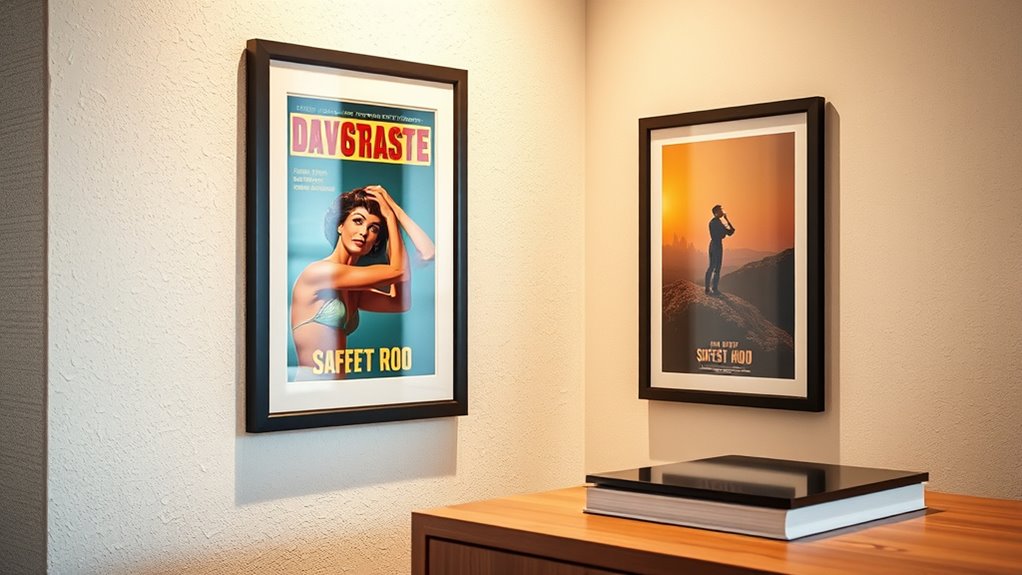
Choosing the right framing and mounting options is essential to protect your posters long-term. You’ll want to take into account acid-free matting to prevent deterioration, UV-resistant glass to block harmful light, and secure hanging methods to keep everything safe. These choices help preserve your posters’ condition and ensure they look great for years to come. Additionally, selecting reliable mounting hardware can prevent accidental falls or damage over time. Incorporating outdoor kitchen materials and techniques can also inspire innovative ways to safeguard your posters, especially if they will be displayed in variable environments. Consulting space‑heating basics may provide insights into maintaining optimal environmental conditions that support poster preservation. Understanding networking and cable infrastructure principles can even help you create a controlled display environment, such as climate-controlled display cases or specialized lighting setups. Moreover, implementing climate control systems can significantly enhance long-term preservation by regulating temperature and humidity levels around your posters.
Acid-Free Matting Choices
Using acid-free matting is essential when framing and mounting posters at home because it helps prevent deterioration over time. Choose materials like acid-free backing and lignin-free paper to guarantee longevity. These materials resist yellowing and acid migration that can damage your poster. When selecting matting:
- Look for lignin-free paper to avoid acid-induced discoloration
- Opt for acid-free backing to provide a neutral, protective layer
- Check for pH-neutral or archival-quality labels indicating safe materials
- Avoid standard cardboard or non-archival mats that can harm your poster
These choices safeguard your artwork and maintain its appearance. Proper acid-free matting acts as a barrier, preventing acids from contacting your poster and reducing the risk of fading or deterioration in the future.
UV-Resistant Glass Options
Protecting your posters from light damage is key to preserving their vibrant colors and details over time. UV-resistant glass offers essential UV protection, blocking harmful ultraviolet rays that cause fading and deterioration. When choosing framing options, opt for glass with added UV protection to safeguard your posters without compromising clarity. Look for glass specifically designed for durability, as it resists scratches, smudges, and breakage, ensuring long-lasting protection. UV-resistant glass not only preserves color fidelity but also maintains the poster’s overall integrity. Keep in mind that selecting high-quality, UV-protective glass is a simple yet effective way to extend the lifespan of your posters while maintaining their visual appeal. Proper glass choices are a vital step in your archiving efforts at home.
Secure Hanging Methods
To keep your posters safe and secure, selecting the right framing and mounting methods is essential. Proper hanging hardware guarantees stability and minimizes damage, so choose corrosion-resistant hooks or wires suited for your wall type. Before hanging, prepare your wall by cleaning and measuring carefully to avoid misalignment. Consider using picture hanging strips for lightweight posters or hooks for heavier pieces. Use wall anchors if you’re mounting on drywall to prevent slipping. Ensure your hardware is appropriate for the weight and size of your poster. Additionally, check that your mounting surface is smooth and free of debris to prevent shifting. Proper wall preparation paired with suitable hanging hardware keeps your posters secure and minimizes the risk of damage over time.
Avoiding Common Preservation Mistakes
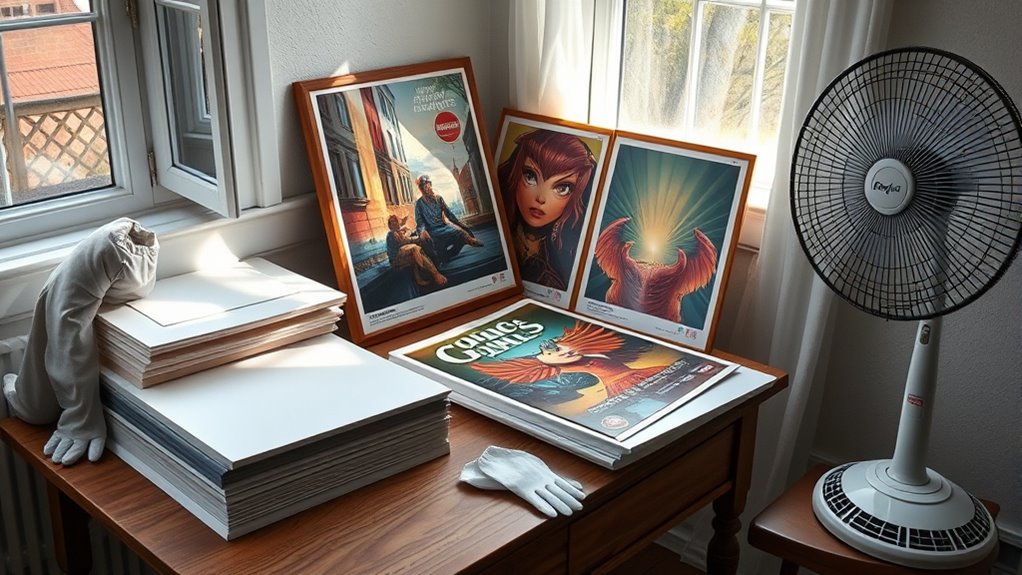
Many common preservation mistakes can easily damage posters if you’re not careful. Framing mistakes, like using non-archival glass or improper backing, can trap moisture and cause deterioration over time. Avoid cheap or acidic mats that can stain or weaken the paper. Improper lighting is another frequent error; exposure to direct sunlight or harsh artificial light accelerates fading and paper breakdown. To protect your posters, keep them in low light conditions and use UV-filtering glass if framing. Also, never hang posters in damp or humid areas, as moisture promotes mold growth and warping. Handling posters with bare hands can transfer oils and dirt, so wear gloves or handle by the edges. Being mindful of these common pitfalls helps ensure your posters stay vibrant and intact for years to come. Additionally, incorporating smart lighting with circadian support can help control light exposure and preserve your posters’ quality over time. Proper climate control is essential to prevent fluctuations in temperature and humidity that can damage delicate paper surfaces.
Regular Maintenance and Inspection Practices
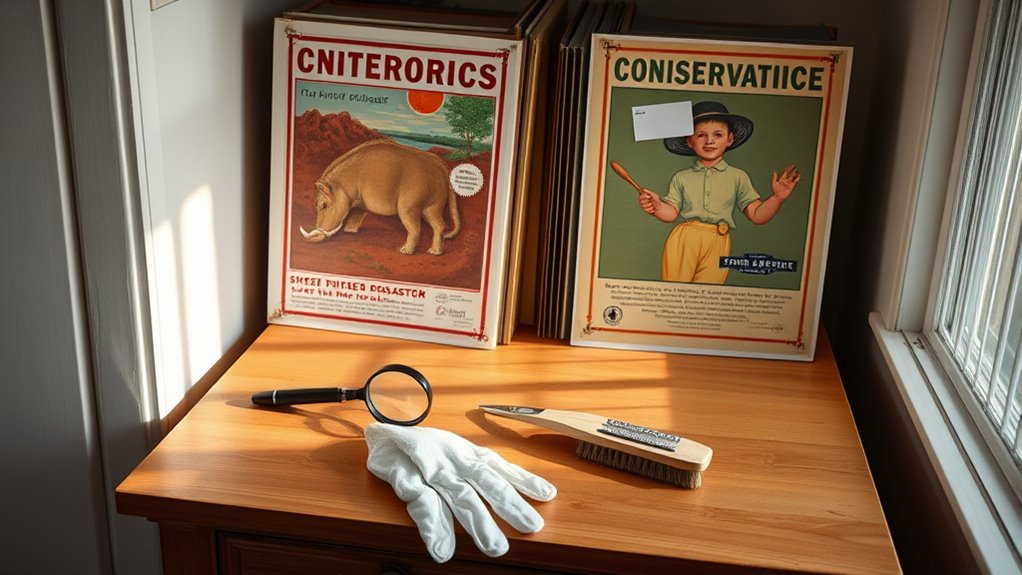
Regular maintenance and inspection are essential to keep your posters in top condition. You should routinely check for signs of deterioration, such as fading, tears, or discoloration. Environmental monitoring helps you maintain stable conditions—keep humidity and temperature levels consistent to prevent damage. Incorporate digital archiving by photographing or scanning posters to create backups and track their condition over time. Regularly clean surfaces gently to prevent dust buildup. Look for signs of pests or mold, and address issues promptly. Consider the following practices:
- Use digital archiving for record-keeping and condition tracking
- Monitor environmental conditions with a hygrometer and thermometer
- Inspect posters for physical damage or fading
- Clean surfaces carefully to prevent dust accumulation
Consistent care guarantees your posters stay preserved for years.
Frequently Asked Questions
How Often Should I Inspect My Posters for Damage?
You should inspect your posters every 6 to 12 months for damage. Use proper framing techniques that include UV protection to prevent fading and deterioration. Regular checks help you spot issues like discoloration or tears early. When inspecting, make sure your posters are in a stable environment away from direct sunlight. This routine guarantees your posters stay vibrant and well-preserved for years to come.
Can I Use Regular Household Cleaning Products on Posters?
You shouldn’t use regular household cleaning products on posters because they can damage the paper and ink. Instead, use acid-free materials and a soft, dry cloth to gently clean dust. For added protection, consider UV protection UV-filtering glass or acrylic when displaying your posters. These measures help preserve your posters’ colors and prevent deterioration over time, ensuring they stay vibrant and intact for years to come.
What Are the Best Adhesives for Mounting Posters?
Like a vintage vinyl record, choosing the right adhesives makes all the difference. For mounting posters, you should opt for acid-free adhesives that are designed for archival use. Removable mounting products are ideal, as they hold your posters securely without damaging the paper or leaving residue. These adhesives allow you to reposition or remove posters easily, ensuring your artwork stays pristine while you enjoy your personal museum collection at home.
How Do Temperature Fluctuations Affect Poster Preservation?
Temperature fluctuations can considerably affect your poster preservation by causing the materials to expand and contract, which may lead to warping or cracking. To minimize this, you should maintain consistent humidity control and avoid heat impact, especially from direct sunlight or heating sources. Keeping your posters in a stable environment helps prevent damage, ensuring they stay in good condition over time. Regularly monitor the temperature and humidity levels for ideal preservation.
Is It Safe to Store Posters in Plastic Bags Long-Term?
Storing posters in plastic bags long-term isn’t the best idea, as it can trap moisture and cause mold or paper deterioration. Imagine your poster safely tucked away, but trapped humidity gradually turning it yellow and fragile. Instead, use acid-free materials and breathable sleeves for long-term storage. This way, your poster stays protected, retains its vibrance, and avoids the risks associated with sealed plastic bags over time.
Conclusion
By following these simple tips, you’ll turn your posters into timeless treasures, safeguarding memories like a vigilant guardian. Remember, each careful step is a brushstroke in the masterpiece of preservation. Think of your posters as stories waiting to be told—protect them well, and they’ll continue to inspire and delight for generations to come. After all, in the gallery of your home, your posters deserve nothing less than your best care.