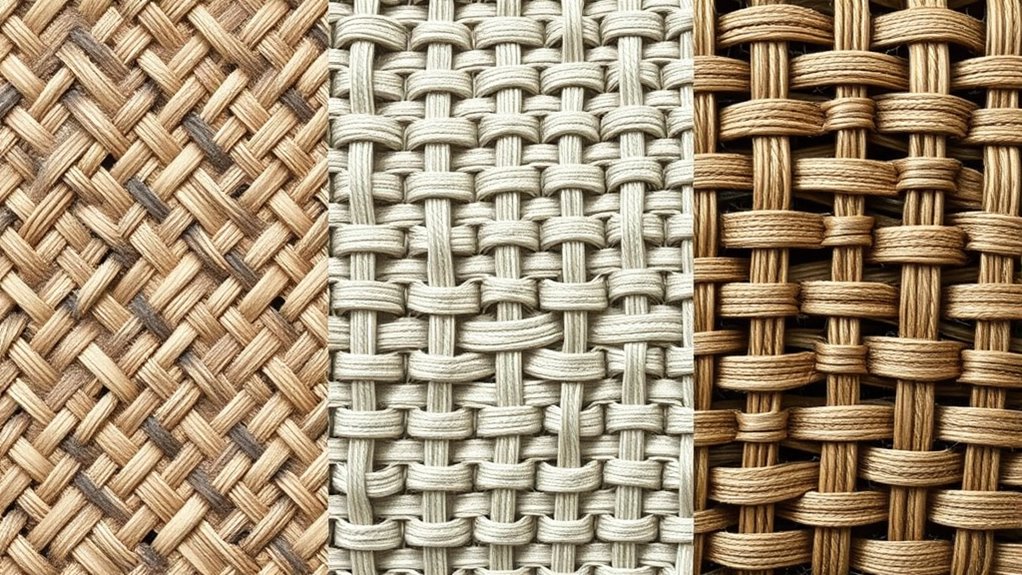

Understanding weave patterns like herringbone, birdseye, and basket helps you see how textile design balances durability, style, and craftsmanship. Herringbone features a V-shaped zigzag that adds strength, while birdseye has tiny diamond motifs that hide stains and bolster fabric toughness. Basket weave resembles a woven grid, offering resilience and flexibility. Exploring these patterns shows how they enhance fabric performance and appearance, making your selection more functional and stylish as you continue exploring.
Key Takeaways
- Herringbone features a V-shaped zigzag pattern, originating from ancient Roman and Egyptian textiles, known for durability and classic style.
- Birdseye displays tiny diamond-shaped motifs resembling eyes or birds, providing texture and enhanced strength to fabrics.
- Basket weave mimics a woven grid pattern, offering thick, resilient fabric with a straightforward construction rooted in ancient cultures.
- These patterns influence textile durability, resistance to wear, and aesthetic appeal, reflecting craftsmanship and historical origins.
- Interlocking structures like basket weave improve fabric resilience, making these patterns suitable for high-performance and casual textiles.
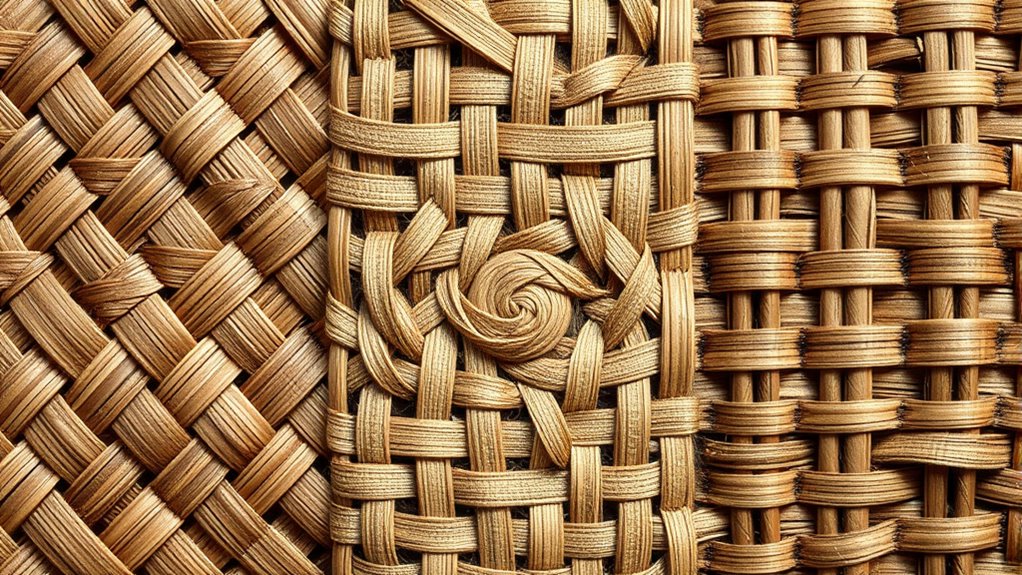
Ever wonder how different fabrics and textiles get their unique looks and strength? It all comes down to the weave patterns used during the manufacturing process. These patterns are more than just aesthetic choices; they influence textile durability, how well the fabric holds up over time, and even its historical origins. By understanding these patterns—like herringbone, birdseye, and basket—you can better appreciate the craftsmanship behind your garments and textiles.
Starting with herringbone, this pattern features a distinctive V-shaped design that resembles a broken zigzag. Its roots trace back centuries, with origins in ancient Roman and Egyptian textiles. The pattern became especially popular in the 19th century during the weaving boom in England, where it was used for durable suiting fabrics. The interlocking weave of herringbone enhances textile durability, making it resistant to wear and tear, which is why it’s often found in workwear and high-quality suits. Its tight, sturdy structure distributes stress evenly across the fabric, preventing fraying and increasing longevity. If you’ve ever noticed a suit or coat with a subtle zigzag pattern, chances are, it’s herringbone, revered not just for style but also for its resilience.
Next, consider birdseye, a pattern characterized by tiny, diamond-shaped motifs that resemble tiny birds or eyes. This pattern has a rich history, believed to have originated in the early 20th century, particularly in England and America. It’s often used in woven fabrics like wool and cotton, especially for dress shirts and blazers. The birdseye weave involves a specific technique that creates small, textured bumps on the fabric’s surface, which enhances textile durability by adding extra strength to the weave. Its textured surface also helps hide minor stains and wear, making it practical for everyday use. The pattern’s origins are linked to traditional weaving techniques, but today, it’s appreciated for its subtle sophistication and toughness. When you see a crisp, patterned shirt or blazer with a tiny diamond pattern, you’re likely looking at a fabric crafted with a birdseye weave, blending style and durability seamlessly.
Finally, the basket weave pattern stands out for its simple yet sturdy design, resembling the woven grid of a basket. This pattern has ancient roots, dating back thousands of years in various cultures, including China, Egypt, and the Middle East. Historically, basket weaving techniques influenced textile weaving patterns, which prioritized strength and flexibility. The basket weave involves weaving two or more weft threads over and under multiple warp threads in a crisscross manner. This creates a thick, resilient fabric that’s flexible yet durable enough for upholstery, bags, and casual wear. Its straightforward construction makes it one of the most accessible weave patterns but doesn’t compromise on strength. If you’ve ever handled a sturdy tote or a woven rug, you’ve experienced the durability that a basket weave imparts. Additionally, the interlocking structure of basket weave contributes significantly to its resilience and long-lasting performance.

Herringbone Tweed 3 Piece Mens Suits Wool Blend Formal Party Dinner Tuxedo Set Business Suit Jacket Blazer Vest Pants for Men Grey Gray M
You can get:Jacket + Vest + Pants ,3-Piece Tweed Suit.
As an affiliate, we earn on qualifying purchases.
As an affiliate, we earn on qualifying purchases.
Frequently Asked Questions
Which Weave Pattern Is Most Durable for Heavy-Use Flooring?
You should choose the herringbone pattern for the most durable heavy-use flooring. Its durability comparison shows it withstands heavy traffic better than birdseye or basket weave. Herringbone’s interlocking design provides stability, reducing wear over time. Additionally, it has moderate maintenance requirements, making it easier to keep in good condition. So, if you want long-lasting flooring that holds up well under constant use, herringbone is your best option.
Can These Patterns Be Customized for Unique Furniture Designs?
Yes, you can customize these weave patterns for unique furniture designs by exploring pattern variation and incorporating custom designs. You might alter the direction, size, or color of the weave to create a distinctive look that suits your style. Working with skilled artisans or designers allows you to blend traditional patterns like herringbone, birdseye, or basket with your personal touch, resulting in one-of-a-kind furniture pieces that stand out.
Are There Eco-Friendly Options for Traditional Weave Patterns?
Yes, you can choose eco-friendly options for traditional weave patterns. Think of sustainable materials like reclaimed wood, bamboo, or cork that breathe new life into classic designs. Pair these with eco-conscious finishes to reduce environmental impact. By selecting these alternatives, you guarantee your furniture is both stylish and kind to the planet, turning timeless patterns into a statement of your commitment to sustainability.
How Do Weave Patterns Affect the Acoustic Properties of Wood?
You’ll find that weave patterns like herringbone, birdseye, and basket influence the wood’s acoustic properties by affecting sound absorption and resonance effects. Intricate patterns can break up sound waves, reducing echo and improving clarity, while simpler weaves might allow more resonance, amplifying certain frequencies. By choosing specific patterns, you can tailor a space’s sound environment, making it more suitable for conversations, music, or quiet reflection.
What Tools Are Necessary for Creating Detailed Weave Pattern Inlay?
You’ll need precision tools like fine chisels, carving knives, and a steady-hand saw for creating intricate inlay patterns. Wood carving tools help carve out the detailed weave designs, ensuring pattern precision. A high-quality rotary tool with micro bits allows you to achieve delicate, intricate details effortlessly. Additionally, a ruler, square, and marking gauges are essential to maintain perfect symmetry and alignment, turning your craftsmanship into an artful masterpiece.

Van Heusen Men's Pinpoint Regular Fit Solid Button Down Collar Dress Shirt, White, 17" Neck 34"-35" Sleeve
EASY CARE: Machine washable; no dry cleaning required
As an affiliate, we earn on qualifying purchases.
As an affiliate, we earn on qualifying purchases.
Conclusion
Think of these weave patterns as the threads of your personal tapestry. Just as each pattern adds unique texture and character, your choices in style create a story only you can tell. When you select herringbone, birdseye, or basket, you’re weaving your identity into the fabric of everyday life. Embrace the diversity, for it’s the variety that forms a vibrant, resilient cloth—reminding you that your individuality is the most beautiful pattern of all.

AK TRADING CO. 40" Wide Burlap Fabric 10oz Natural – Heavy Duty 100% Jute Material for Upholstery, Home Décor, Gardening, & Wedding Projects – Eco-Friendly & Biodegradable – 40 Inches x 5 Yards
Durable 100% Natural Jute Material: AK TRADING CO. 40" Wide Burlap Fabric is crafted from high-quality, 100% natural…
As an affiliate, we earn on qualifying purchases.
As an affiliate, we earn on qualifying purchases.

Meecuppa Cotton Lawn Fabric, White, 58 Inch Wide, 2 Yard, Washed Cotton Fabric Cloth for Sewing, Clothing, Needlework, Bags, Tablecloths
CONVENIENT SIZE: 58-inch wide, 2-yard length fabric providing sufficient fabric for multiple small projects or one larger creation
As an affiliate, we earn on qualifying purchases.
As an affiliate, we earn on qualifying purchases.