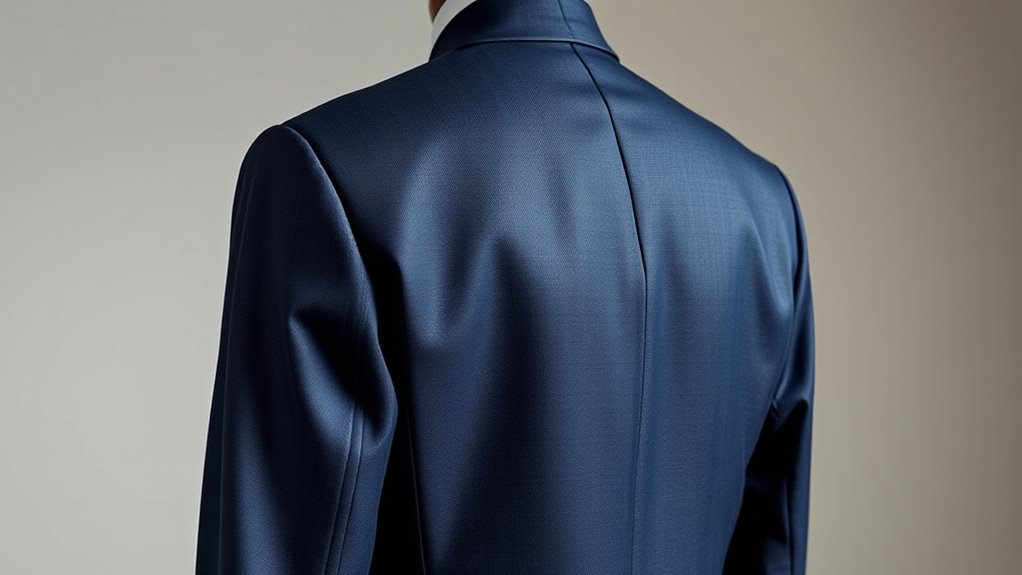

Your suit drapes better depending on its fabric weight. Lighter fabrics (7-9 oz) flow more smoothly and conform to your body, offering a relaxed feel ideal for warmer weather. Heavier fabrics (12 oz and above) provide more structure, creating sharper lines and a tailored silhouette, which are best for cooler climates or formal settings. The right weight balances comfort and style, and uncovering more about how fabric weight impacts draping can help you choose the perfect suit.
Key Takeaways
- Lighter fabrics (7-9 oz) drape more fluidly, conforming smoothly to the body’s shape.
- Heavier fabrics (12 oz+) provide structure, resulting in a sharper, more defined silhouette.
- Fabric weight influences how the suit hangs and moves, affecting its overall drape quality.
- Proper lining and thread count complement fabric weight, enhancing suit flow and shape.
- Selecting an appropriate fabric weight for climate and occasion ensures optimal drape and comfort.
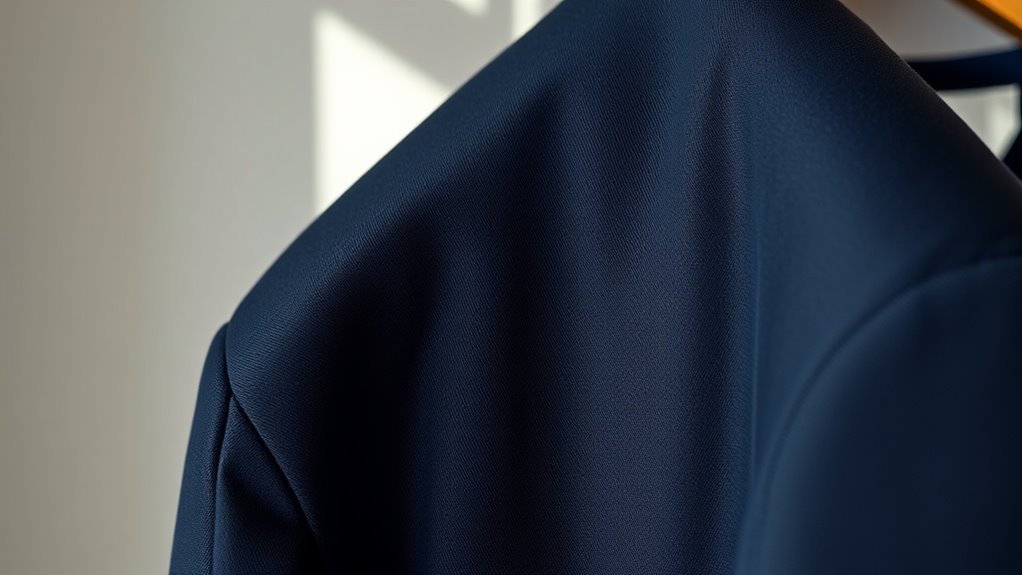
Have you ever wondered how the weight of fabric influences the look and feel of a suit? It’s a key factor that determines how your suit drapes, feels, and even how long it lasts. The weight of fabric is usually measured in ounces per yard, and this number directly impacts the suit’s overall structure and comfort. When choosing a suit, understanding fabric weight helps you select one that aligns with your style, climate, and occasion. Lighter fabrics, around 7 to 9 ounces, tend to drape more fluidly and are ideal for warmer weather, but they may lack the robustness of heavier options. Heavier fabrics, from 12 ounces upward, provide more structure, making your suit appear sharper and more formal, but they can also feel stiffer and less breathable.
Now, consider the role of thread count and suit lining when evaluating fabric quality. Thread count, which refers to the number of threads woven into a square inch of fabric, influences both the fabric’s strength and its drape. Higher thread counts often mean a smoother, more refined surface, contributing to a sleeker look. But higher thread count alone doesn’t guarantee a better suit; it’s about balancing thread quality and weight for ideal drape and durability. The suit lining also plays a significant part in how a suit drapes and feels. A high-quality lining adds weight and structure, helping the outer fabric hang properly and retain its shape over time. Linings made from silk or fine polyester can add a touch of luxury, but they also influence how the suit feels when you wear it—lighter linings for warmer climates and heavier, more substantial linings for winter wear.
Additionally, fabric weight variation can affect how your suit performs over time, especially with frequent wear and cleaning. The combination of fabric weight, thread count, and lining determines how your suit behaves on your body. A suit with a carefully chosen weight and a good lining will drape smoothly, emphasizing your silhouette without feeling restrictive. For example, a lightweight fabric with a high thread count and a silk lining will flow effortlessly, perfect for summer events. In contrast, a heavier fabric with a thicker lining offers more structure, making it suitable for formal occasions or cooler weather. Ultimately, understanding these elements helps you pick a suit that not only looks sharp but also feels comfortable and lasts through seasons. When you grasp how fabric weight interacts with thread count and lining, you gain the tools to choose suits that drape better, fit well, and elevate your style confidently.
Top picks for "some suit drape"
Open Amazon search results for this keyword.
As an affiliate, we earn on qualifying purchases.
Frequently Asked Questions
How Does Fabric Weight Affect Suit Breathability?
Fabric weight directly impacts suit breathability, with lighter fabrics offering better breathability compared to heavier ones. A breathability comparison shows that lighter fabrics facilitate better airflow, helping moisture management and keeping you cooler. Heavier fabrics tend to trap heat and moisture, making them less suitable for warm weather. So, if you want a suit that keeps you comfortable and dry, opt for lighter fabric weights that promote better breathability and moisture control.
Can Fabric Weight Influence Suit Durability Over Time?
You might worry that a heavier fabric won’t last, but it actually enhances durability over time. With proper fabric care and skilled tailoring techniques, heavier fabrics resist wear and tear better, maintaining their shape and appearance longer. Investing in quality fabric weight means your suit ages gracefully, providing reliable wear for years. Don’t underestimate the power of good craftsmanship combined with the right fabric weight to keep your suit looking sharp.
What Fabric Weights Are Best for Summer Suits?
For summer suits, you should opt for lightweight fabrics that keep you cool and comfortable. Fabrics like linen, seersucker, or lightweight wool are ideal because they’re breathable and won’t trap heat. These summer suit fabrics are perfect for high temperatures, offering a relaxed fit and better drape in warmer weather. Choose these options to stay stylish and comfortable during hot days.
Does Fabric Weight Impact Suit Wrinkle Resistance?
Sure, fabric weight impacts wrinkle resistance—lighter fabrics tend to wrinkle more because they’re softer and less stiff, making your suit look like it’s been through a war. Heavier fabrics, with their added stiffness, resist wrinkles better, keeping you sharp. So, if you want a suit that laughs in the face of creases, opt for a heavier weight. Otherwise, prepare for a crumpled, less confident appearance.
How Does Weight Vary Between Different Suit Styles?
You’ll notice that fabric weight varies between suit styles, affecting fabric drape and suit stiffness. Lightweight fabrics, often used in summer suits, are more fluid and have a softer drape, making them more comfortable but less stiff. Heavier fabrics, common in winter suits, provide more structure and stiffness, giving a sharper silhouette. Choosing the right weight depends on your desired style and comfort, impacting how your suit drapes and feels throughout the day.
Conclusion
Ultimately, choosing the right fabric weight allows your suit to flow with your movements, embracing your natural elegance. When you select a suit that drapes beautifully, it subtly enhances your presence without effort, hinting at confidence and refinement. Remember, the perfect suit isn’t just about style—it’s about feeling comfortable and poised in your own skin. So, trust your instincts and let the fabric’s gentle weight whisper your quiet sophistication.