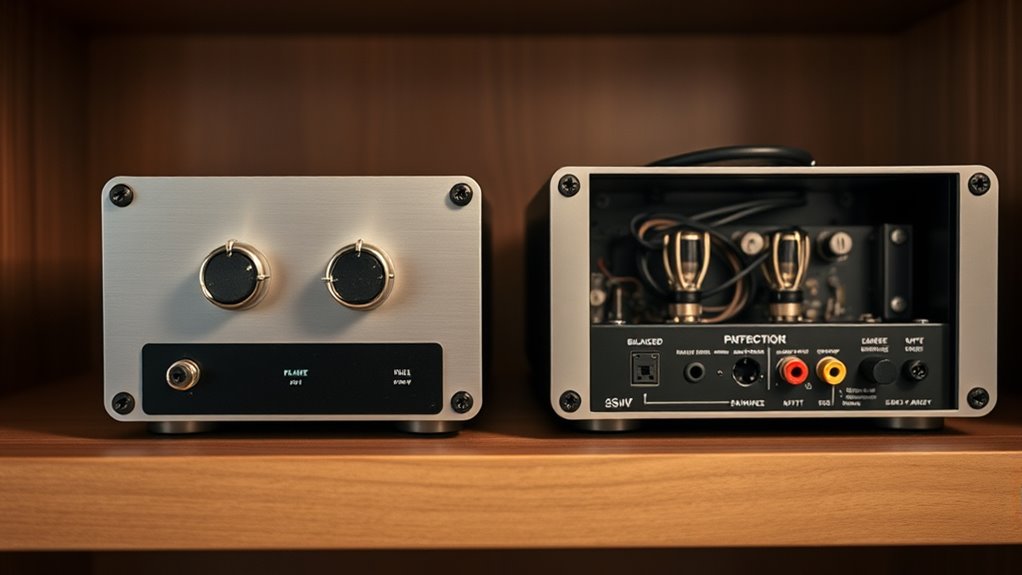

Balanced audio uses three conductors and shielding to cancel out noise, making it ideal for long cable runs and noisy environments. Single-ended systems have two conductors and lack extensive shielding, so they’re better suited for short, low-noise setups. Your choice depends on where you connect and the level of audio quality you need. Keep exploring to understand how these differences can improve your sound setup and performance.
Key Takeaways
- Balanced audio uses three conductors and shielding for noise cancellation, ideal for high-interference environments.
- Single-ended audio uses two conductors with less shielding, suitable for low-noise, short-distance setups.
- Balanced systems effectively reduce hum and buzz over long cable runs, maintaining audio clarity.
- Single-ended connections are simpler and cost-effective but more susceptible to electromagnetic interference.
- Choice depends on environment: balanced for noisy or long-distance use, single-ended for controlled, low-noise settings.
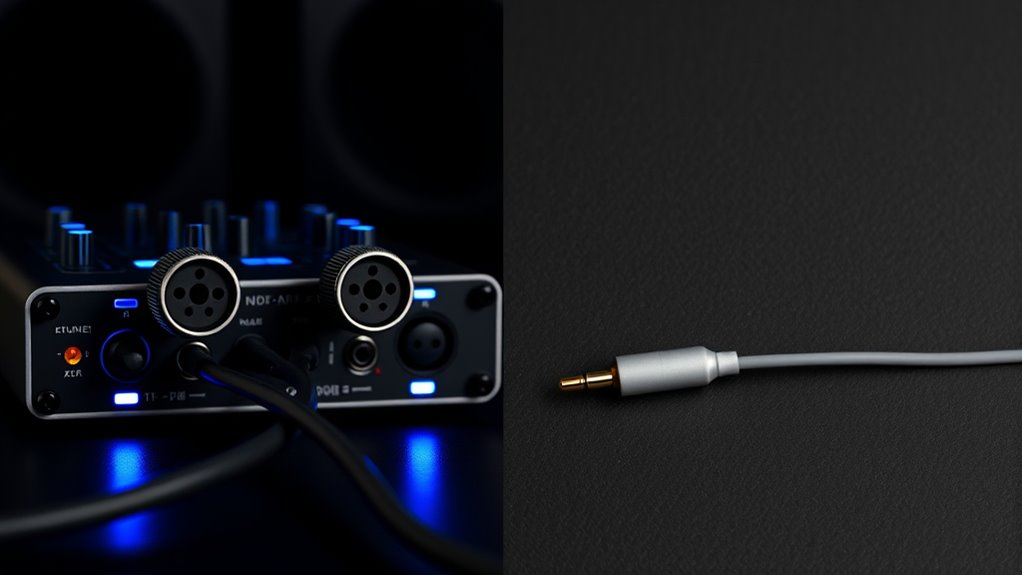
When choosing audio connections, understanding the difference between balanced and single-ended systems is essential for ideal sound quality. The core distinction lies in how each system handles noise and interference, which directly impacts your listening experience. In a balanced setup, the cables are designed with three conductors: two signal wires and a ground. The key advantage here is cable shielding, which plays a vital role in noise cancellation. The shielding encases the internal conductors, blocking external electromagnetic interference from disrupting the audio signal. As a result, balanced systems excel in environments with lots of electrical noise, such as recording studios or live sound settings. The noise cancellation inherent in these cables ensures that your audio remains clear and free from hums or buzzes, even over long cable runs.
Single-ended systems, on the other hand, typically use two conductors: one signal and one ground. While they are simpler and often less expensive, they lack the extensive cable shielding found in balanced cables. This means they are more susceptible to picking up electromagnetic interference, especially over longer distances. If your setup involves a short cable run in a low-noise environment, single-ended connections can still deliver excellent sound quality. However, when you’re in a situation with significant electrical interference, single-ended systems may struggle to maintain clarity, and you might notice hissing or buzzing that diminishes your listening experience.
Deciding between the two involves evaluating your environment and your priorities. If noise cancellation is critical—say, you’re recording in a busy studio or performing live—balanced connections are usually the better choice. They provide superior cable shielding and noise rejection, ensuring that your audio remains pristine. Conversely, if you’re connecting headphones or audio equipment in a controlled, low-interference space, single-ended connections often suffice, offering convenience and simplicity without sacrificing sound quality.
Frequently Asked Questions
Can I Convert Single-Ended Outputs to Balanced Inputs Easily?
Yes, you can convert single-ended outputs to balanced inputs, but it’s not always straightforward. You’ll face conversion challenges like maintaining signal integrity and impedance matching. Using a direct box or transformer can help, but make certain it’s designed for proper impedance matching to avoid noise or signal loss. Keep in mind that some conversions might introduce complexity or affect sound quality, so choose your equipment carefully and test thoroughly.
What Are the Best Applications for Balanced Audio in Live Sound?
You might think balanced audio is overkill for live sound, but it’s perfect for demanding applications like studio recording and broadcast transmission. It minimizes interference, guarantees clear signals, and handles long cable runs without noise. So, whether you’re mixing on stage or transmitting broadcasts, balanced audio keeps your sound crisp and reliable. Ironically, its complexity is what makes it the best choice where clarity and stability truly matter.
Do Balanced Connections Always Provide Better Sound Quality?
Balanced connections generally offer better sound quality because they reduce noise and ground loops, especially over long cable runs. You’ll notice clearer audio with less hum or interference, making them ideal for professional setups. However, if your environment is free of interference and short cables, single-ended connections might be sufficient. Overall, for consistent noise reduction and cleaner sound, balanced connections are usually the better choice.
How Does Cable Length Impact Balanced Versus Single-Ended Audio?
Cable length affects both balanced and single-ended audio by increasing potential cable interference and signal attenuation. Longer cables in either setup can pick up more noise, but balanced cables are better at rejecting interference, making them more reliable over extended distances. Single-ended cables are more prone to signal loss and noise over long runs. To guarantee the best sound quality, keep your cable lengths as short as possible, especially for single-ended connections.
Are There Specific Equipment Limitations for Using Balanced Audio Systems?
Think of balanced audio systems as your armor against the chaos of interference and ground loops. You might face equipment limitations like needing specialized connectors or balanced inputs, which can restrict your setup options. These systems are less susceptible to ground loop issues, ensuring cleaner sound. However, if your gear isn’t compatible, you’ll hit a wall, making it essential to match your equipment carefully for maximum performance.
Conclusion
So, now that you know the epic battle between balanced and single-ended audio, go ahead—pick your champion. Whether you prefer the glamorous, noise-resistant hero or the simple, budget-friendly sidekick, just remember: your choice might just determine whether your next playlist sounds like a concert or a cat in a blender. But hey, who needs clarity when you can have chaos, right? Happy listening—may your audio always be as unbalanced as your morning coffee.