Understanding the key differences between D/A and A/D converters helps you appreciate how sound quality is achieved. D/A converters turn digital signals into smooth analog audio, essential for clear playback, while A/D converters capture analog sounds into digital data for accurate recording. Both play important roles in ensuring your audio remains authentic and detailed. If you explore further, you’ll uncover how cutting-edge technology enhances these conversions for truly exceptional sound experiences.
Key Takeaways
- D/A converters transform digital signals into analog output for playback, while A/D converters convert analog signals into digital data for processing.
- High-quality D/A converters preserve audio nuances, essential for accurate sound reproduction, whereas A/D converters capture detailed input signals.
- Both converters rely on resolution and sampling rate to maintain fidelity; better specs lead to more authentic sound.
- Techniques like oversampling and calibration optimize performance and reduce errors in both D/A and A/D conversions.
- The quality of these converters directly impacts overall audio clarity, detail, and realism in sound systems.
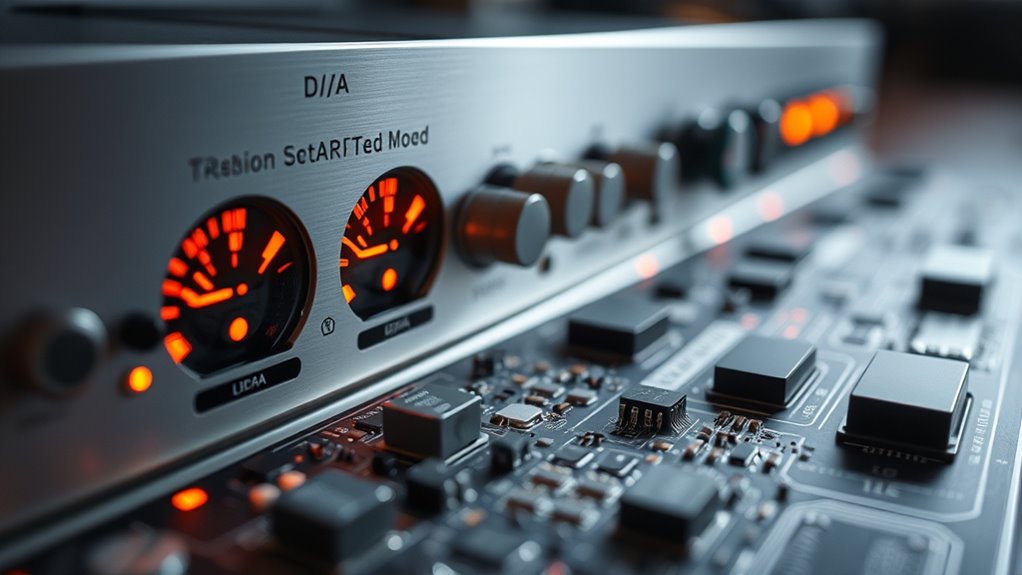
Digital-to-analog (D/A) and analog-to-digital (A/D) converters are fundamental components in modern electronic systems, enabling communication between the digital and analog worlds. Without these converters, devices like your smartphone, audio interfaces, and professional sound equipment couldn’t function seamlessly. Their primary role is to translate signals back and forth, ensuring that digital data becomes meaningful analog signals and vice versa. As you explore high-quality audio or precise measurement systems, understanding how these converters influence digital fidelity and signal integrity becomes essential.
When you use a D/A converter, its job is to transform digital data—binary numbers—into an analog voltage or current that drives speakers or other output devices. The quality of this conversion directly impacts the sound you hear. A high-quality D/A converter preserves the original signal’s nuances, ensuring rich, accurate audio reproduction. If the converter’s resolution is limited or if it introduces noise, the resulting sound can become distorted or lack depth, compromising digital fidelity. You want a converter that minimizes these issues, maintaining a clean, true representation of the digital data.
On the flip side, A/D converters take continuous analog signals—like a microphone’s output—and convert them into digital data that your device can process. The key challenge here is to accurately capture the original signal without losing details or introducing errors. Signal integrity is critical during this process; any distortion or noise added during conversion can lead to a loss of audio quality or measurement precision. High-bit-depth A/D converters with fast sampling rates help guarantee that the digital representation remains faithful to the original analog signal, preserving its clarity and dynamic range. Additionally, the accuracy of these converters depends heavily on circuit design and calibration techniques.
Both types of converters rely on precise circuitry and advanced techniques to optimize performance. For example, oversampling and noise shaping help improve digital fidelity by reducing quantization errors. Similarly, using high-quality components and calibration techniques ensures signal integrity stays intact, preventing unwanted artifacts or signal degradation. As you choose equipment or upgrade your audio system, pay attention to these specifications—they directly influence how accurately your devices can reproduce or capture sound.
In essence, the better the D/A and A/D converters you have, the closer you’ll get to an authentic listening experience. They act as the bridge that maintains the authenticity of signals, ensuring your audio remains clear, detailed, and true to the original source. Whether you’re an audiophile, a professional musician, or someone who simply values quality sound, understanding their role helps you make informed choices that enhance your listening experience.
Frequently Asked Questions
How Do Different Converter Brands Impact Sound Quality?
Different converter brands substantially impact sound quality because of their reputation and manufacturing standards. When you choose reputable brands, you benefit from higher precision, lower noise, and better overall fidelity. Brands with strict manufacturing standards ensure consistent performance and durability. By selecting well-regarded converters, you get clearer, more accurate sound, which enhances your audio experience. Skimping on quality can lead to compromised sound, so prioritize trusted brands known for their excellence.
What Is the Typical Lifespan of D/A and A/D Converters?
You can expect D/A and A/D converters to last around 5 to 10 years, depending on usage and build quality. Proper maintenance, like keeping them clean and avoiding power surges, can prolong their durability. Regularly checking connections and updating firmware also helps improve longevity. Investing in high-quality converters ensures they maintain sound quality longer, giving you better performance and reliability over time.
Can Converter Quality Improve With Software Updates?
Yes, converter quality can improve with software optimization, but only within hardware limitations. You benefit when updates enhance calibration, processing algorithms, or filter settings, making your existing converters perform better. However, if the hardware is outdated or low-end, software can’t fully overcome those limitations. So, while software updates can refine sound quality, they can’t turn a poor converter into a high-end one.
Are There Portable Converters Suitable for Mobile Recording?
Yes, there are portable converters perfect for mobile recording. You might worry about battery life and size, but many models offer excellent portability without sacrificing sound quality. These compact units are lightweight and easy to carry, fitting into your bag or pocket. Plus, they often include rechargeable batteries, so you can record on the go without needing an external power source. This makes mobile recording more convenient and versatile.
How Do Converters Handle High-Resolution Audio Formats?
Converters handle high-resolution audio formats by supporting higher bit depths and sample rates, such as 24-bit and 192kHz. This allows you to capture and reproduce more detail and dynamic range. When you choose a converter, make certain it’s capable of handling these specifications, so your recordings maintain clarity and fidelity. High-resolution support ensures your audio stays true to the original, giving you professional-quality sound for mixing, mastering, or playback.
Conclusion
Ultimately, understanding the difference between D/A and A/D converters helps you appreciate how your favorite music sounds so clear. For instance, a professional studio upgrading their converters might notice a richer, more detailed mix, showcasing how high-quality components make a real difference. Keep in mind, choosing the right converter impacts your listening experience—whether you’re recording or enjoying playback. So, invest wisely, and let your sound truly shine.