
Using an eSIM while traveling in the U.S. gives you flexibility to switch providers easily, save money on roaming, and avoid physical SIM swapping. It works with many recent smartphones but check your device’s compatibility first. You can activate plans by scanning QR codes or using apps, making changes simple and quick. While there are advantages like convenience and cost savings, some setups may require extra steps. If you keep exploring, you’ll find how to get started smoothly.
Key Takeaways
- eSIM offers U.S. travelers quick, digital activation for local or international plans without swapping physical SIM cards.
- Compatibility varies; verify your device supports eSIM to avoid activation issues.
- Cost-effective options include pay-as-you-go plans and international data packages, often cheaper than traditional roaming.
- Switching providers or plans is seamless via QR codes or apps, enhancing travel flexibility.
- Setup may require initial steps like scanning QR codes, so review device instructions before purchasing an eSIM plan.
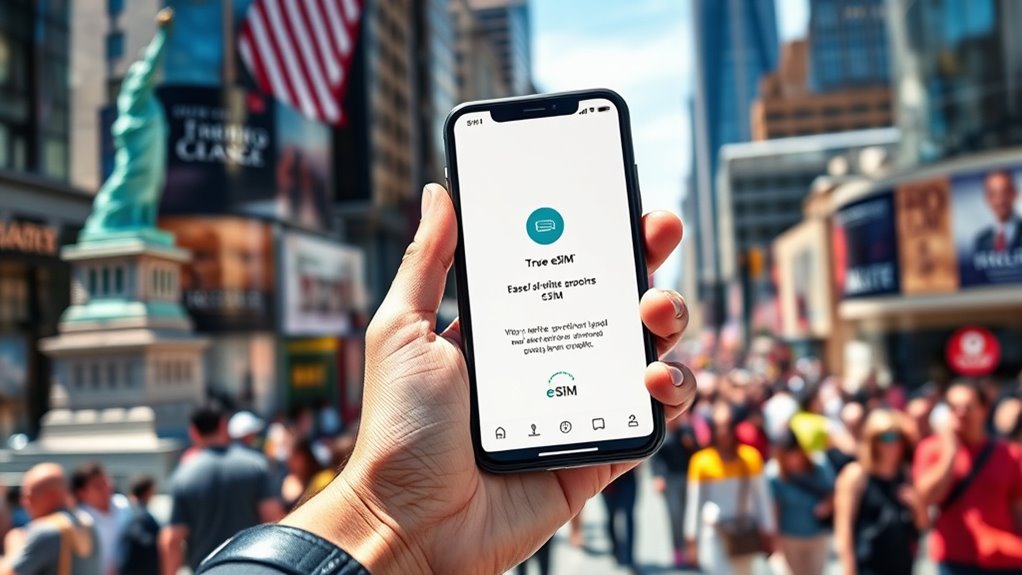
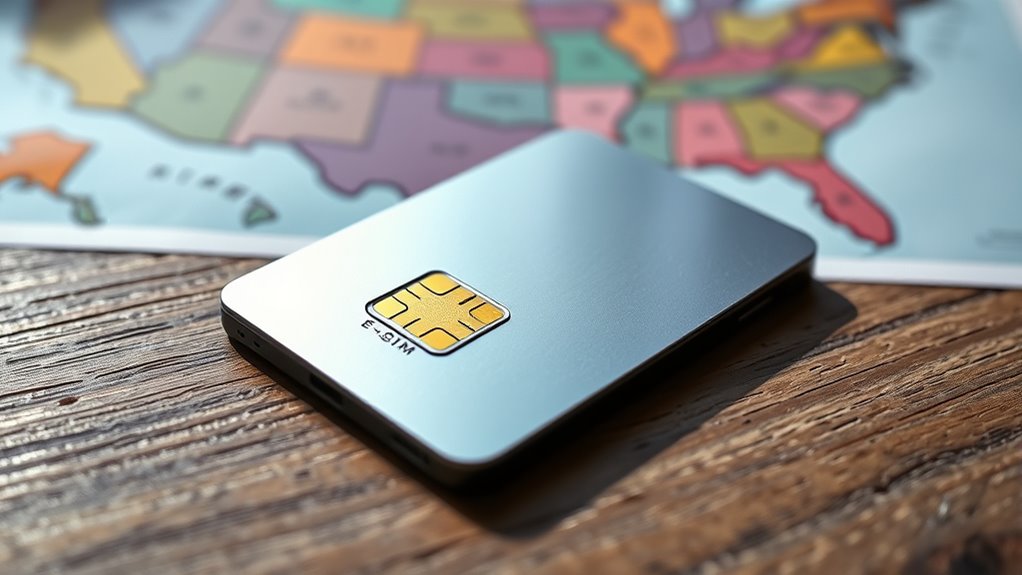
Are you tired of swapping SIM cards whenever you travel abroad? eSIM technology offers a hassle-free way for U.S. travelers to stay connected without changing physical SIM cards. Instead of dealing with multiple cards, you can activate a new cellular plan digitally, directly on your device. But before you jump in, it’s essential to understand device compatibility and how eSIM compares in cost to traditional SIM cards.
First, check your device’s compatibility. Not all smartphones support eSIM technology. Major brands like Apple, Google, and Samsung have integrated eSIM capabilities into their recent models, but older devices might not. If your phone doesn’t support eSIM, you won’t be able to use this technology, regardless of how appealing it seems. To verify, visit your device manufacturer’s website or consult your phone’s settings. Ensuring compatibility saves you time and frustration when choosing a plan and activating it.
Check your device’s compatibility before choosing an eSIM plan to avoid frustration.
When it comes to cost comparison, eSIM plans can vary. Sometimes, they’re more affordable than traditional SIM cards because providers can offer digital-only plans with fewer overhead costs. You might find competitive rates for international data packages, which can save you money during your travels. However, don’t assume eSIM plans are always cheaper; some carriers charge premiums for added flexibility or faster speeds. It’s wise to compare prices across different providers and plans, considering both the data limits and the specific features you need. Some providers even offer pay-as-you-go options, which can be cost-effective if you’re only staying a short time.
Another point to contemplate is the ease of switching plans. With an eSIM, you can change providers or plans without physically swapping SIM cards, making it easier to shop around or switch if you find a better deal. This flexibility is a significant advantage, especially for frequent travelers or those who want to avoid roaming charges. Just remember, some devices may require a little more setup effort, like scanning a QR code or downloading an app, but once done, the process is seamless. Additionally, because eSIM technology is part of European cloud innovation, it benefits from robust security features that protect your data during plan changes.
Frequently Asked Questions
Can I Use Esims With My Existing Phone Plan?
Yes, you can use eSIMs with your existing phone plan if your device supports eSIM activation and your carrier is compatible. Check your phone’s settings for eSIM options and verify with your carrier whether they support eSIM activation. If compatible, you can add an eSIM profile without changing your current plan, making it easy to switch or add services without physical SIM cards.
Are Esims Compatible With All U.S. Smartphone Models?
Imagine fitting a key into a lock—your phone needs the right match. Not all U.S. smartphones support eSIM compatibility due to device limitations, so check your model first. Many newer iPhones and select Androids do, but older phones often don’t. To avoid surprises, verify your device’s capabilities before trying to activate an eSIM. If compatible, you’ll enjoy seamless switching; if not, you might need a traditional SIM.
How Secure Are Esims Against Hacking and Fraud?
ESims are quite secure against hacking and fraud because they use advanced SIM card security measures and data encryption. These features protect your personal information and make it harder for cybercriminals to access your data. While no system is completely immune, ESims offer a robust level of security, especially since they eliminate physical SIM cards, reducing risks like theft or tampering. Always keep your device updated for maximum protection.
Will Using an Esim Affect My International Roaming Charges?
Using an eSIM typically doesn’t affect your international roaming charges directly if you choose local eSIM data plans abroad. However, roaming fee implications depend on your carrier and plan. If you use a local eSIM, you often avoid expensive roaming fees altogether. Always check your carrier’s policies before switching to an eSIM, and consider local data plans to save money on international roaming charges.
What Should I Do if My Esim Isn’T Activating Properly?
If your eSIM isn’t activating properly, start with eSIM troubleshooting by restarting your device. Check your carrier’s activation tips, like ensuring your plan is compatible and your QR code is scanned correctly. Confirm your device’s software is up to date. If issues persist, contact your carrier’s support. These steps often resolve common activation problems, helping you get your eSIM working smoothly and avoid unnecessary delays.
Conclusion
Switching to an eSIM can feel like upgrading from a bicycle to a motorcycle—smoother, faster, and more convenient. I once struggled with SIM cards abroad, fumbling through tiny trays and language barriers. But with an eSIM, you’re in the driver’s seat, instantly connecting wherever you go. Embrace this tech leap, and your travels will be as seamless as a well-oiled machine—freeing you to focus on the adventures ahead.