
If you’re choosing between Qi and MagSafe accessories, consider your device compatibility. Qi is a universal standard compatible with many brands and models, making it a versatile option. MagSafe is made specifically for Apple devices, offering a secure magnetic connection that improves charging efficiency and ease of use. Knowing how each works can help you pick the right accessories. Keep exploring to see how these options fit your needs perfectly.
Key Takeaways
- Qi accessories are compatible with a wide range of devices across multiple brands and models.
- MagSafe accessories are designed specifically for iPhone models from iPhone 12 onward and compatible Apple devices.
- Qi chargers work with various charging pads and stands, offering broad device compatibility.
- MagSafe accessories attach securely via magnets, ensuring proper alignment for optimal charging performance.
- Compatibility of MagSafe accessories is limited to Apple ecosystem devices supporting MagSafe technology.
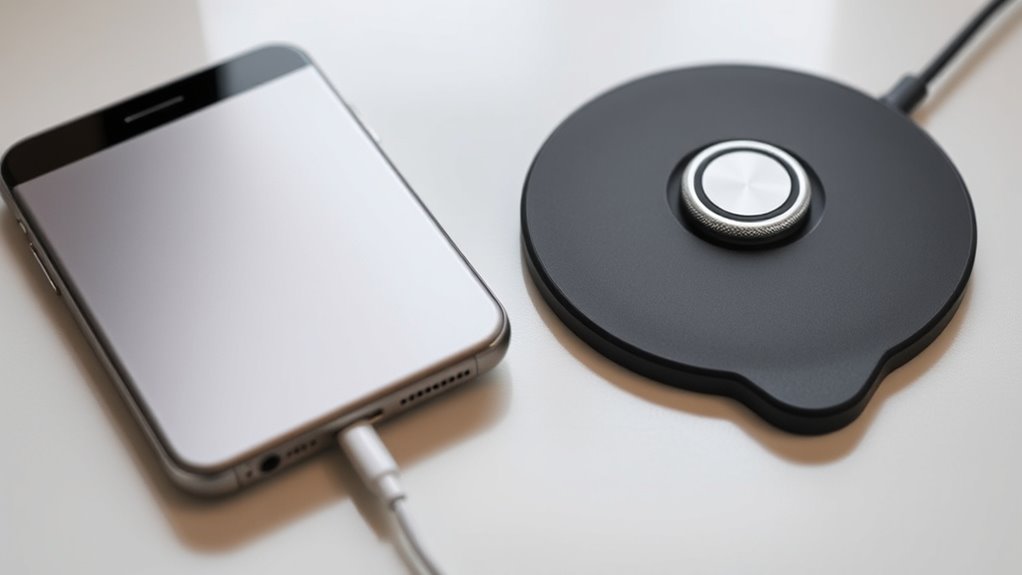
When choosing between Qi and MagSafe accessories, understanding their differences can help you make an informed decision. Both options facilitate wireless charging, but they do so in distinct ways, which can impact your user experience. Qi wireless charging is a universal standard that works with a wide range of devices and chargers. It relies on electromagnetic induction, where power is transferred through an electromagnetic field between the charger and your device. This setup is flexible, allowing you to use various charging pads and stands, but it generally offers less precise alignment. You simply place your device on the pad, and as long as it’s within the charging zone, it begins to power up. The process is straightforward, but the efficiency can vary, especially if your device isn’t perfectly aligned with the charging coil. Wireless charging standards ensure compatibility across many devices, making Qi a popular choice for diverse users.
MagSafe, on the other hand, introduces a magnetic connection, specifically designed for Apple devices. It uses built-in magnets in both the iPhone and compatible accessories, ensuring a secure and exact alignment every time. This magnetic connection not only simplifies the process but also enhances charging efficiency, as the device is perfectly positioned for ideal power transfer. With MagSafe, you don’t have to worry about your device slipping off or being misaligned, which can sometimes happen with traditional Qi chargers. The magnetic connection also allows for the accessories to snap into place effortlessly, making it more convenient for daily use, especially when you’re in a hurry or on the go.
Frequently Asked Questions
Can Qi Chargers Work With Non-Magsafe Iphone Cases?
Yes, Qi chargers can work with non-MagSafe iPhone cases, but case compatibility matters. If your case is too thick or made of metal, wireless power transfer might be hindered. For ideal charging, use a thinner, non-metallic case that allows the Qi charger to connect properly. Keep in mind that non-MagSafe cases won’t align magnetically, so you’ll need to position your phone carefully for consistent wireless power transfer.
Are Magsafe Accessories Compatible With Android Devices?
MagSafe accessories aren’t compatible with Android devices because of their magnetic attachment system. Only Apple’s MagSafe products are designed for seamless integration with iPhones equipped with built-in magnets. Remarkably, over 70% of Android users prefer magnetic accessories for convenience, but they won’t work across platforms. If you’re an Android user, look for accessories specifically designed for your device to ensure proper fit and functionality.
Do Magsafe Accessories Charge Faster Than Qi Chargers?
MagSafe accessories generally charge faster than Qi chargers because they have higher power output, enabling quicker charging speeds. MagSafe’s magnetic alignment guarantees efficient energy transfer, optimizing charging speed. However, your device’s maximum charging capacity also influences speed; if it can’t handle higher power, you won’t see much difference. So, if you want the fastest charging, choose MagSafe with compatible devices, but always consider your device’s charging limits.
Is There Any Risk of Damage Using Incompatible Wireless Chargers?
Using incompatible wireless chargers can pose risks, such as electromagnetic interference that disrupts your device’s performance, and overheating concerns that may damage your phone or the charger. You should always verify your device is compatible with the charger you’re using. If not, you might experience reduced charging efficiency or even permanent damage. To stay safe, stick with certified chargers and avoid using unverified, incompatible options.
Can I Use a Qi Charger With a Magsafe-Compatible Case?
Yes, you can use a Qi charger with a MagSafe-compatible case, but keep in mind that MagSafe provides better alignment and charging efficiency. Without MagSafe’s magnetic alignment, your device might not sit perfectly on the Qi charger, leading to slower charging or inconsistent power delivery. For ideal performance, make sure the case is compatible and aligns well with the Qi charger to maximize charging efficiency and avoid frustration.
Conclusion
So, whether you’re leaning toward Qi or MagSafe, it’s all about what fits your style. Coincidentally, both offer solid charging options, but MagSafe’s magnetic magic makes it easier to attach and detach. You might find yourself surprised how seamlessly they work together, almost like they were meant for each other. In the end, it’s not just about compatibility—it’s about finding the one that keeps your devices powered and your day flowing effortlessly.