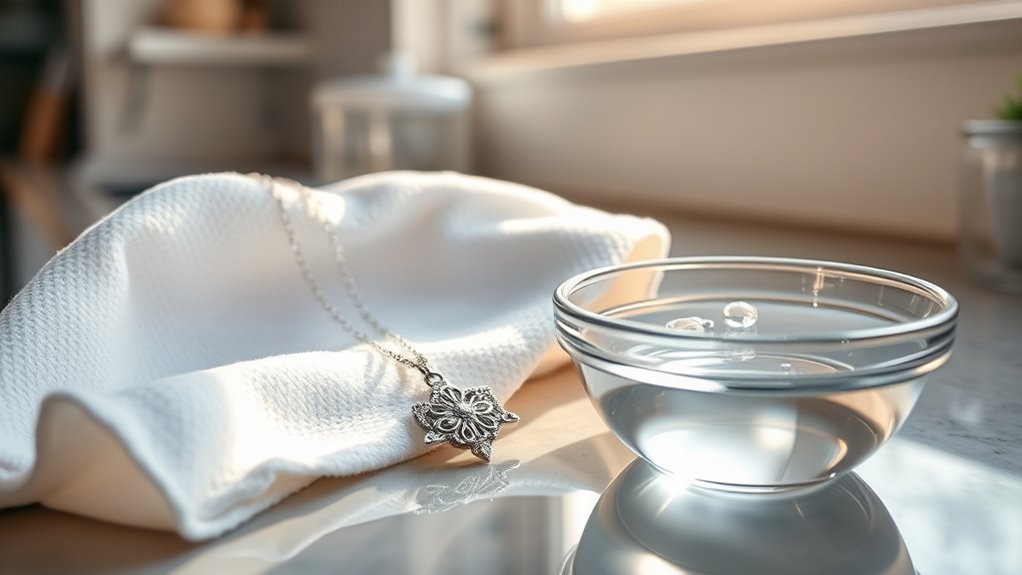

To clean your jewelry safely at home, use a soft cloth or a gentle, vetting cleaning solution suitable for your metal and stones. Mix mild soap with warm water and carefully scrub with a soft toothbrush, especially around intricate details. Rinse thoroughly and dry with a soft cloth to avoid water spots. For tarnish or heavy dirt, specialized cleaners can help—but remember to test solutions first. Keep these tips in mind to safely keep your jewelry shining; more helpful advice awaits if you continue.
Key Takeaways
- Use a soft, damp cloth or microfiber for gentle surface cleaning and polishing.
- Mix mild soap with warm water and use a soft toothbrush to clean crevices gently.
- Avoid harsh chemicals; test cleaning solutions on small areas first for safety.
- Remove gemstones or delicate settings before applying strong cleaning solutions or tarnish removers.
- Dry jewelry thoroughly with a soft cloth to prevent water spots and streaks.
Keeping your jewelry sparkling doesn’t have to mean expensive trips to the jeweler. You can maintain its shine right at home with simple, effective techniques. One of the key steps is understanding the right polishing techniques to restore luster without damaging delicate pieces. Using a soft cloth, such as a microfiber or jewelry-specific polishing cloth, gently buff the jewelry to remove fingerprints, smudges, and surface dirt. For more stubborn tarnish, you might consider using a jewelry polishing cloth that’s specially designed for specific metals. Always avoid abrasive materials or harsh scrubbing, which can scratch or dull the finish. When polishing, work in gentle circular motions, and be cautious around settings or intricate designs that could be more vulnerable to damage. Additionally, using vetted cleaning solutions designed for specific metals can help ensure safety and effectiveness.
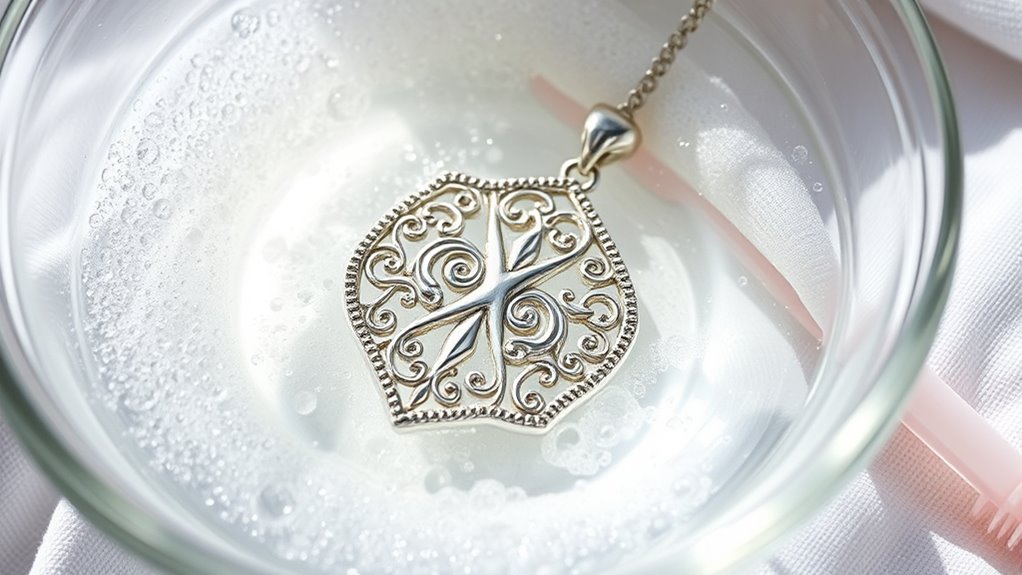
In addition to polishing techniques, the right cleaning solutions can make a big difference in keeping your jewelry looking its best. There are many commercial cleaning solutions available that are formulated for specific types of jewelry, like gold, silver, or gemstones. Before applying any solution, check the manufacturer’s instructions carefully. For many types of jewelry, a mild soap and warm water mixture works well. You can create your own cleaning solution by mixing a few drops of gentle dish soap with warm water. Soak your jewelry for a few minutes, then use a soft-bristled toothbrush to gently scrub away dirt from crevices and underneath stones. Rinse thoroughly with clean water and dry with a soft cloth.
For pieces that are heavily tarnished, especially silver jewelry, specialized cleaning solutions can be very effective. Silver dips, for example, quickly remove tarnish but should be used sparingly and according to the instructions to prevent over-etching or damage. Always remove any gemstones or delicate settings before using strong cleaning solutions, as some chemicals can harm the stones or metal. If you’re unsure about what solution to use, testing a small, inconspicuous area first can prevent mishaps.
Frequently Asked Questions
Can I Use Toothpaste to Clean All Types of Jewelry?
You can’t use toothpaste to clean all types of jewelry because its abrasiveness may damage delicate materials. Toothpaste works well for some metals like gold or silver, but it can scratch softer jewelry or damage gemstones. Always consider jewelry material compatibility before using toothpaste. For safer results, opt for gentle cleaning solutions designed for jewelry or consult a professional to avoid unintended damage.
How Often Should I Clean My Jewelry at Home?
You should clean your jewelry at home every few weeks to maintain its shine and prevent buildup. While some pieces need more frequent attention, like daily-wear earrings or rings, others can go longer. Regular cleaning is a key part of your maintenance routine, and investigating the best cleaning frequency helps protect your jewelry’s integrity. Remember, over-cleaning can cause damage, so balance is essential for keeping your jewelry looking its best.
Are Homemade Cleaning Solutions Safe for All Gemstones?
Homemade cleaning solutions aren’t safe for all gemstones, so you should be cautious with DIY methods. Some gemstones, like pearls and opals, are delicate and can be damaged by harsh chemicals or vinegar-based cleaners. Always check the chemical safety of your homemade solutions before use, and test on a small area first. When in doubt, consult a professional to avoid damaging your jewelry with potentially harmful DIY methods.
What Should I Do if My Jewelry Gets Damaged During Cleaning?
If your jewelry gets damaged during cleaning, don’t panic like a knight in shining armor. Stop cleaning immediately and assess the damage. For jewelry repairs, consider consulting a professional jeweler to guarantee proper repair and avoid further harm. They have the expertise and tools to fix delicate pieces safely. Remember, a quick professional consultation can save you from costly mistakes and keep your jewelry looking its best.
Is Ultrasonic Cleaning Safe to Try at Home?
Ultrasonic cleaning can be safe at home if you follow proper ultrasonic safety guidelines and comprehend home cleaning risks. Make sure to use a device designed for jewelry, avoid overexposure, and keep it away from delicate stones or porous materials. Always read the instructions carefully, and don’t use harsh chemicals. If you’re unsure, consult a professional to prevent damage and ensure effective cleaning without risking your jewelry’s integrity.
Conclusion
Cleaning your jewelry at home can be a gentle touch that keeps your treasured pieces shining brightly. With a little care and the right techniques, you’ll preserve their beauty and keep them looking their best for years to come. Remember, a soft approach often works best—treat your jewelry like a delicate secret, and it’ll reward you with timeless elegance. Embrace these simple steps, and your sparkling treasures will continue to tell your story beautifully.