The chef’s knife has come a long way from classic Sabatier designs to today’s innovative models. Modern knives focus on comfort, safety, and durability with improved ergonomic handles and advanced blade materials like high-tech stainless steels and ceramics. These innovations allow for sharper, longer-lasting edges and better control. As technology evolves, knives become more efficient and user-friendly. Keep exploring to discover how these changes can elevate your culinary skills even further.
Key Takeaways
- The chef’s knife evolved from basic, handcrafted tools like Sabatier to advanced, ergonomically designed modern knives.
- Sabatier knives, originating in France, were known for quality carbon steel blades and craftsmanship.
- Modern innovations incorporate high-tech materials, improved handle ergonomics, and layered blade patterns for better performance.
- Advances focus on durability, sharpness retention, safety, and user comfort compared to traditional Sabatier designs.
- Today’s chef’s knives blend traditional craftsmanship with technological improvements for enhanced culinary precision and ease.
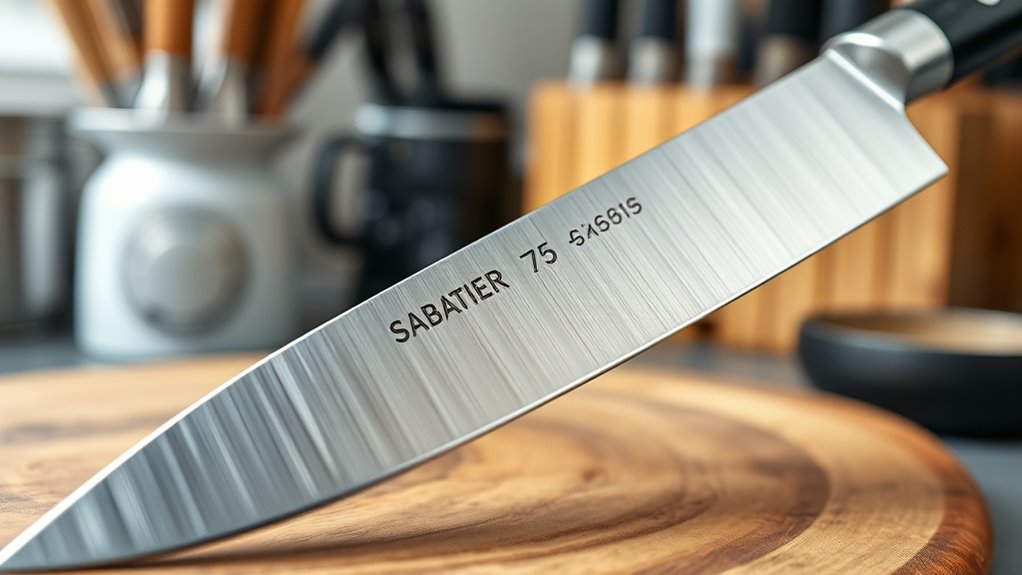
The chef’s knife has come a long way from its ancient origins to become the versatile tool you rely on in the kitchen today. Over centuries, this essential implement has evolved considerably, driven by advances in design and materials. Modern chefs and home cooks alike benefit from innovations that enhance comfort, safety, and performance. One key area of development is knife handle ergonomics. Early knives often had simple, wooden handles that could become uncomfortable during prolonged use. Today, manufacturers prioritize ergonomic designs that fit comfortably in your hand, reducing fatigue and improving control. Handles are crafted with contours and textures that ensure a secure grip, even when your hands are wet or greasy. This focus on ergonomics not only makes chopping and slicing easier but also minimizes the risk of accidents, as a secure grip translates to better precision and safety during use.
Alongside handle improvements, blade material innovations have dramatically transformed the quality and durability of chef’s knives. Traditional blades made from carbon steel or high-carbon alloys offered sharpness but often required frequent maintenance to prevent rusting and corrosion. Now, modern blade materials like high-tech stainless steels, ceramic composites, and layered Damascus patterns deliver exceptional performance with less upkeep. These materials maintain their edge longer, reduce the need for frequent sharpening, and resist corrosion, making your knife more reliable over time. Advanced blade materials also enable manufacturers to craft thinner, sharper edges that glide effortlessly through ingredients, whether you’re slicing vegetables or carving meats. The combination of superior blade materials with precise manufacturing techniques results in knives that retain their sharpness, stay hygienic, and last for years.
These innovations are not just technical upgrades; they’re designed with your experience in mind. Ergonomic handles reduce strain, allowing you to work comfortably for extended periods, while blade material advances ensure your knife remains sharp and dependable. Additionally, blade stability and proper heat treatment play crucial roles in maintaining the integrity of the blade over time. Together, these features elevate your culinary skills, making prep work more enjoyable and efficient. Whether you’re a professional chef or a home cook, understanding the importance of handle ergonomics and blade material innovations helps you choose a knife that suits your needs perfectly. The evolution of the chef’s knife isn’t just about aesthetics or tradition—it’s about creating a tool that works smarter for you, making every cut precise, comfortable, and safe. As technology continues to advance, you can expect even more refined designs that blend comfort, durability, and performance seamlessly into your kitchen routine.

Plys Kitchen Meat Cleaver Knife – Unique Effort Saving Ergonomic Knife Professional Stainless Steel Chef Cooking Knives for Cutting Meat Vegetable Father Mother
PREMIUM MATERIAL & CRAFT – We inherit and improve traditional hand forging techniques, from high-temperature treatment, hand forging,…
As an affiliate, we earn on qualifying purchases.
As an affiliate, we earn on qualifying purchases.
Frequently Asked Questions
What Materials Are Best for Modern Chef’s Knife Blades?
You should choose blades made from high-quality stainless steel, ceramic, or titanium for modern chef’s knives. Ceramic blades are incredibly sharp and lightweight, making them perfect for delicate tasks, while titanium knives offer excellent durability and corrosion resistance. Both materials improve performance and longevity. So, depending on your needs, ceramic blades provide precision, and titanium knives deliver strength, ensuring your kitchen tools stay reliable and efficient.
How Do Handle Designs Impact Knife Performance?
You notice how handle designs impact your knife performance by enhancing your comfort, control, and confidence. An ergonomic grip minimizes fatigue, allowing you to slice precisely and efficiently. Handle durability guarantees your knife withstands daily use without slipping or breaking, giving you peace of mind. When your handle fits perfectly, feels sturdy, and supports your movements, your cutting becomes smoother, safer, and more enjoyable every time you step into the kitchen.
Are There Eco-Friendly Options for Chef’s Knives?
Yes, eco-friendly chef’s knives are available. You can choose knives made from sustainably sourced materials like bamboo or recycled steel. Look for brands that prioritize sustainable sourcing and use biodegradable packaging to reduce environmental impact. These options help you cook responsibly while maintaining performance. By selecting eco-conscious knives, you support environmentally friendly practices without compromising on quality, making your kitchen more sustainable and eco-aware.
What Are the Maintenance Tips for Preserving Knife Sharpness?
Your knife’s sharpness is the secret weapon in your kitchen, so you must keep it in top shape. Regular knife honing realigns the blade, preventing dullness from taking over. Always dry your knife thoroughly after use to prevent rust, and store it properly to avoid damage. Applying a light coat of oil can also help with rust prevention. With these tips, your knife will stay razor-sharp for years to come.
How Do Different Knife Shapes Affect Cutting Techniques?
Different knife shapes, shaped by their geometry and cutting angles, influence how you cut. A curved blade, like a chef’s knife, lets you rock the knife for efficient slicing and chopping, while a straight blade offers precision for pushing cuts. A narrow, pointed tip excels at detailed work, whereas a wider, rounded blade is better for scooping. Understanding these design features helps you adapt your technique for ideal results.

PAUDIN Chef Knife, 8 Inch High Carbon Stainless Steel Sharp Kitchen Knife with Ergonomic Handle, Gift Box for Family & Restaurant
Professional Chef's Knife: This PAUDIN kitchen knife is suitable for cutting bread, vegetables, fillets or meats etc, and…
As an affiliate, we earn on qualifying purchases.
As an affiliate, we earn on qualifying purchases.
Conclusion
So, after all this, you might think modern chef’s knives are the pinnacle of perfection. But honestly, with all the high-tech materials and fancy designs, it’s amusing to realize that a simple Sabatier, centuries old, still slices just as smoothly—proof that sometimes, history’s best tools don’t need a makeover. In the end, whether you’re wielding a vintage or a cutting-edge blade, it’s your skill that truly makes the cut.

Kyocera Revolution 2-Piece Ceramic Knife Set: Chef Knife For Your Cooking Needs, 5.5" Santoku and 4.5" Utility Knife, White Blades with Blue Handles, White/Blue
Culinary Companion: Explore the world of Kyocera ceramic knives with the Revolution 2-Piece Ceramic Knife Set, tailored for…
As an affiliate, we earn on qualifying purchases.
As an affiliate, we earn on qualifying purchases.

Japanese Chef Knife Set 3 Pcs, 67-Layer Damascus Kitchen Knife Set with VG10 Steel Core, Professional Sharp Damascus Knives with Ocean-Blue Ergonomic Handle, Include Elegant Cooking Gifts Box
【Damascus Knife Set】Atumuryou 3 piece knife set comes with 8" Chef Knife, 7" Santoku Knife and 3.5" Paring…
As an affiliate, we earn on qualifying purchases.
As an affiliate, we earn on qualifying purchases.