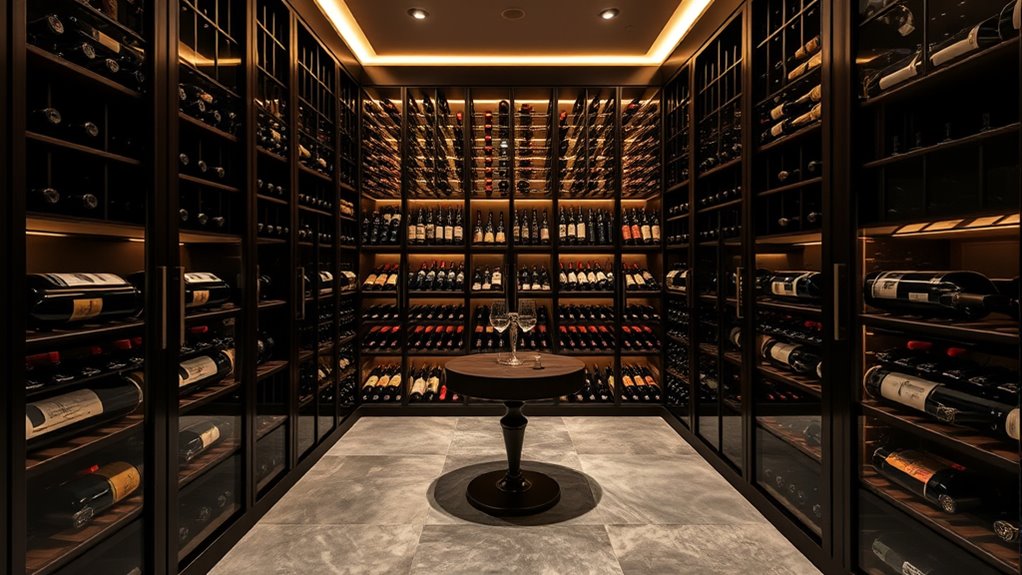

To build a wine cellar, start by choosing a space with controllable temperature and humidity. Install sturdy, adjustable racks arranged by wine type or region for easy access and visual appeal. Invest in climate control systems to keep temperatures around 55°F and humidity between 60-70%, while avoiding direct sunlight and UV exposure. Proper insulation and airflow are essential for consistent conditions. Keep safety and aesthetics in mind—continue for expert tips on creating a perfect wine storage and display area.
Key Takeaways
- Use custom or modular racks to organize wines by type, vintage, or region, ensuring stability and aesthetic appeal.
- Maintain a consistent temperature around 55°F and humidity between 60-70% with reliable climate control systems.
- Avoid direct sunlight and UV exposure by selecting indirect lighting that minimizes heat and preserves wine quality.
- Plan a spacious, accessible layout with durable racks and proper insulation for stable conditions and easy retrieval.
- Combine functional storage with attractive display options to create an environment ideal for aging and enjoying fine wines.
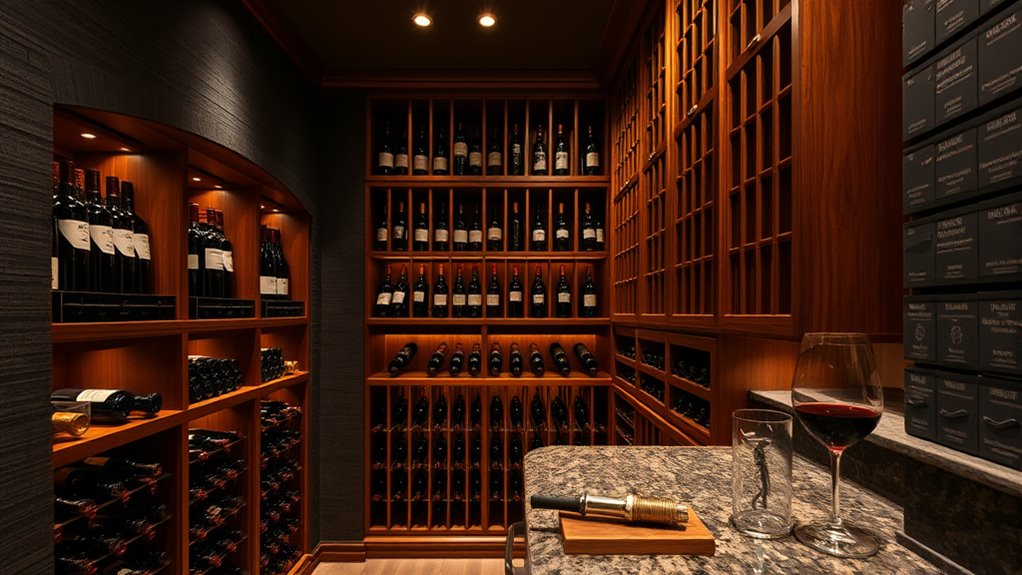
Creating a wine cellar can be a rewarding project that enhances your home and preserves your wine collection. Whether you’re a casual enthusiast or a serious collector, designing a space that showcases your wines while maintaining ideal storage conditions is essential. The foundation of a successful wine cellar lies in choosing the right storage solutions, particularly wine racks, and ensuring proper climate control. Your wine racks should be both functional and aesthetic, allowing easy access while displaying your bottles attractively. You might opt for custom wood racks that fit your space perfectly or modular options that can be expanded over time. Arranging your wines by type, vintage, or region within these racks makes it easier to select the perfect bottle for any occasion.
Climate control is arguably the most critical aspect of building a wine cellar. Wine is sensitive to temperature fluctuations, humidity levels, and light exposure, all of which can spoil your collection. Ideally, you want to maintain a consistent temperature of around 55°F (13°C) and humidity levels between 60-70%. Investing in a reliable cooling system designed specifically for wine storage helps you achieve this. These systems regulate temperature and humidity, preventing mold, cork drying, or premature aging. If you’re working with a small space or a closet, portable climate control units can work well, but larger cellars might require more sophisticated, built-in solutions. Proper insulation is also crucial to keep temperature fluctuations at bay, especially in areas prone to temperature swings. Additionally, insulation materials that are suitable for wine cellars can significantly improve climate stability.
Lighting is another consideration that ties into climate control. You should avoid direct light, particularly sunlight, as UV rays can degrade wine over time. Use low-intensity, indirect lighting that doesn’t generate heat. When selecting wine racks, think about accessibility and airflow. Racks that allow air circulation help maintain even temperature and humidity, reducing the risk of mold or spoilage. Additionally, make sure your wine racks are sturdy enough to support the weight of your bottles, especially if you plan to store larger or heavier bottles.
Finally, consider the overall layout of your cellar. You want enough space for you to move comfortably and access bottles without disturbing others. Properly planning your wine racks, climate control system, and lighting ensures that your home wine cellar not only looks impressive but also provides an ideal environment for aging and enjoying your wines. With attention to these details, you’ll create a space that’s both beautiful and functional, preserving your collection for years to come.
Frequently Asked Questions
What Is the Ideal Humidity Level for a Wine Cellar?
You should keep your wine cellar’s humidity around 60-70% for ideal wine preservation. Maintaining this range ensures cellar stability, preventing corks from drying out or mold from developing. Use a hygrometer to monitor levels and consider a humidifier if needed. Consistent humidity protects your bottles, preserves their quality, and creates a stable environment that keeps your fine wines in perfect condition for years to come.
How Should I Organize Wines by Type or Vintage?
You should organize your wines by type or vintage to keep things simple and accessible. Use different wine rack styles, like horizontal racks for bottles stored by vintage, which helps keep the cork moist. For easy identification, consider label orientation—either facing outward or sideways—so you can quickly locate the wine you want. This method guarantees your collection stays organized and visually appealing, making your wine experience more enjoyable.
What Are the Best Lighting Options for a Wine Cellar?
Lighting in your wine cellar should be as subtle as moonlight. You’ll want to choose LED lighting for its low heat and energy efficiency, ensuring your wines stay cool. Complement this with soft ambient lighting to create a warm, inviting atmosphere. Avoid harsh or direct light that can harm your wines. By combining LED and ambient lighting, you protect your collection while showcasing it beautifully.
How Do I Prevent Mold and Mustiness in My Cellar?
To prevent mold and mustiness in your cellar, guarantee proper air circulation by installing a ventilation system or using a small fan. Keep humidity levels between 60-70%, and regularly check for leaks or excess moisture. Good air flow discourages mold growth and keeps the environment fresh. Additionally, clean the area periodically with a mild solution to remove any mold spores and maintain ideal mold prevention.
What Temperature Fluctuations Are Acceptable in a Home Wine Cellar?
Think of your wine cellar as a delicate symphony that needs steady tuning. You should keep temperature fluctuations within 5°F (about 3°C) to protect your wines. Proper temperature control relies on good cellar insulation, which minimizes sudden changes. Avoid rapid swings, as they can spoil your collection. Maintain a consistent environment, and your wines will age gracefully, like a fine melody that never loses its harmony.
Conclusion
Creating your wine cellar is more than just storage; it’s a subtle art that invites you to indulge in quiet elegance. As you craft this intimate space, you’re gently elevating your experience, turning everyday moments into refined celebrations. With careful attention and a touch of patience, your collection will whisper its stories, waiting for the perfect occasion to shine. Embrace the journey—your cellar is a secret haven where timeless memories quietly unfold.