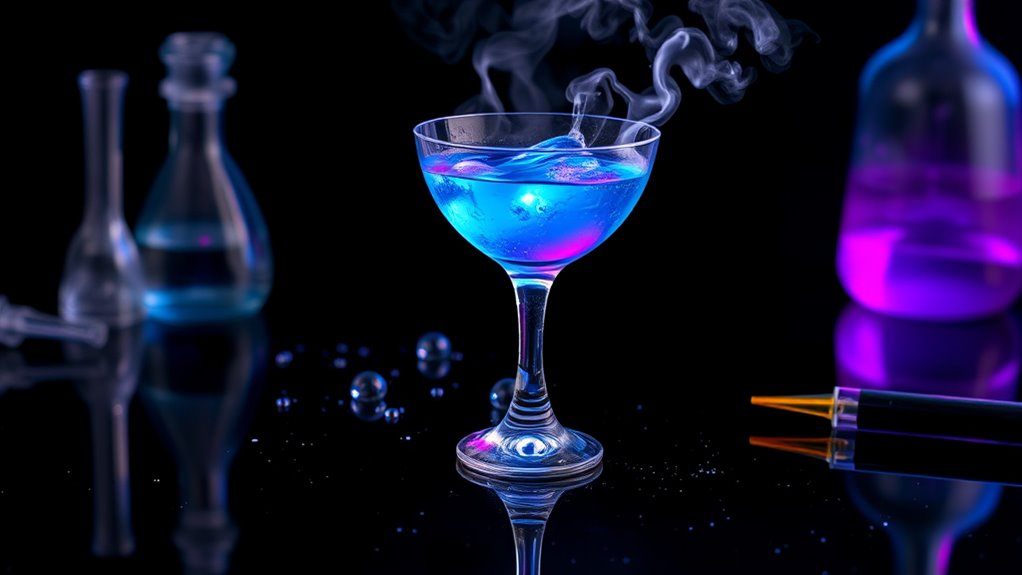

Molecular mixology blends chemistry with bartending to craft visually stunning and inventive cocktails that engage all your senses. Techniques like creating gelatin spheres and edible foams allow you to add surprising textures, flavors, and visual effects that go beyond traditional drinks. By understanding the science behind these methods, you can master impressive, multidimensional beverages. If you’re curious about elevating your cocktail game with these innovative tricks, exploring further will reveal how science transforms the art of mixology.
Key Takeaways
- Molecular mixology blends scientific techniques with traditional cocktails to create innovative textures, flavors, and visual effects.
- Techniques like gelatin spheres and edible foams add sensory layers, enhancing aroma, texture, and visual appeal.
- Understanding the science behind ingredients and processes ensures precise control and reliable, impressive results.
- Combining multiple techniques transforms standard drinks into engaging, multi-sensory experiences that wow guests.
- Practical knowledge of chemistry helps bartenders craft visually stunning and memorable cocktails with unique sensory dimensions.
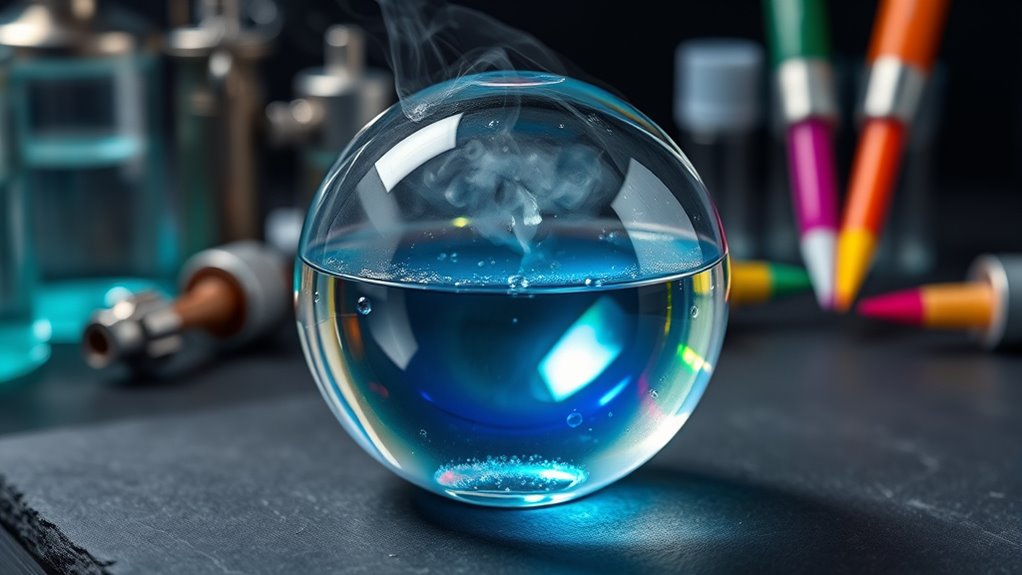
Molecular mixology transforms traditional cocktails by incorporating scientific techniques to create innovative textures, flavors, and visual effects. Instead of just pouring liquids into a glass, you get to explore new sensory dimensions—think shimmering edible foams or perfectly round gelatin spheres that burst with flavor. These techniques make your drinks not only more exciting but also more memorable, engaging your senses in novel ways.
One of the most enthralling tools in molecular mixology is the use of gelatin spheres, often called “caviar” or “pearls.” You can create these tiny, delicate spheres that resemble fish roe but are packed with flavorful liquids like fruit juices, liqueurs, or even aromatic infusions. The process involves dropping a flavored liquid into a bath of sodium alginate, which causes it to form a thin gel membrane. When you bite into a gelatin sphere, it releases a burst of intense flavor, adding a surprising and delightful element to your cocktail. You can customize the size, color, and flavor of these spheres to match your drink’s theme or ingredients, elevating the visual appeal and complexity of your cocktails.
Create colorful gelatin spheres that burst with flavor, adding a playful, gourmet touch to your cocktails.
Edible foams are another signature feature of molecular mixology, offering airy, lightweight textures that can carry aroma and flavor to your palate in a different way than liquids. Using a siphon or blender, you can whip up a foam from ingredients like fruit juice, herbs, or even spirits, creating a cloud that sits atop your drink. These foams not only enhance the presentation but also amplify the aroma, making each sip more sensual. Imagine a citrus cocktail topped with a zesty, fragrant foam that releases a burst of scent as you take a sip—it’s an experience that engages more than just your taste buds.
Combining these techniques allows you to craft cocktails that are visually stunning and multi-sensory. You might serve a drink with floating gelatin spheres that pop in your mouth, topped with a delicate edible foam that adds aroma and lightness. The key is understanding the science behind each element—how to balance the ingredients, control the textures, and execute the techniques properly. You don’t need to be a scientist; just follow precise instructions, and you’ll find that these methods are accessible and fun to experiment with. As you master the art of molecular mixology, you’ll discover that your cocktails can go from standard to extraordinary, enthralling your guests and transforming your home bar into a laboratory of flavor and visual wonder.
Being aware of the science behind each element helps you better control the textures and flavors, ensuring consistency and impressive results in your creations.
Frequently Asked Questions
What Safety Precautions Are Necessary for Molecular Mixology Experiments?
When doing molecular mixology, you should always prioritize safety by carefully controlling temperature and handling ingredients properly. Use ingredient substitutions cautiously, ensuring they’re food-grade and safe for consumption. Wear gloves and goggles when working with chemicals or foams, and work in a well-ventilated area. Always follow proper procedures, and never rush experiments. This way, you minimize risks and create innovative cocktails safely.
Can Molecular Cocktails Be Prepared at Home Safely?
Think of your kitchen as a science lab where you’ll craft edible foams and encapsulate flavors safely. Yes, you can prepare molecular cocktails at home, but you need to handle ingredients like sodium alginate and calcium chloride with care. Follow precise measurements, use food-grade materials, and keep safety gear handy. With attention and respect for chemistry, you’ll create stunning drinks that wow without risking your safety.
What Equipment Is Essential for Molecular Mixology?
You’ll need basic equipment like a siphon or pipette, small bowls, and a blender for molecular mixology. These tools help you master ingredient substitutions and perfect technique tutorials. A kitchen scale guarantees precision, while a fine strainer filters out unwanted particles. With these essentials, you can safely experiment at home, creating innovative cocktails that impress with their texture and presentation. Just follow proper safety guidelines, especially when handling chemicals.
How Do Molecular Techniques Alter Traditional Cocktail Flavors?
Imagine adding a sphere of citrus juice to your cocktail, bursting with flavor. Molecular techniques like spherification enhance flavors and modify textures, creating a more dynamic drinking experience. These methods allow you to intensify or subtly alter traditional flavors, making each sip more exciting. By leveraging flavor enhancement and texture modification, you turn ordinary cocktails into innovative creations that surprise and delight your palate.
Are There Any Allergies Associated With Molecular Ingredients?
Yes, there are allergy risks with molecular ingredients like egg whites, dairy, or certain gels. You should prioritize allergy awareness and inform guests about potential allergens. To guarantee safety, consider ingredient substitutions, such as plant-based foams or alternative thickeners. Always check labels and communicate clearly with your guests to prevent allergic reactions and create an enjoyable, worry-free experience.
Conclusion
As you take a sip, the silky sphere bursts, releasing a burst of vibrant flavor that dances on your tongue. The shimmering fog drifts around your glass like a mystical cloud, heightening the anticipation. Molecular mixology transforms each drink into a mesmerizing experience, where science and art collide. You don’t just drink; you indulge in a sensory journey that sparks wonder and excitement with every carefully crafted, edible masterpiece. Cheers to the magic of chemistry in every glass!