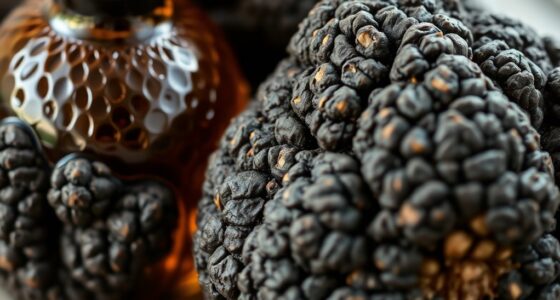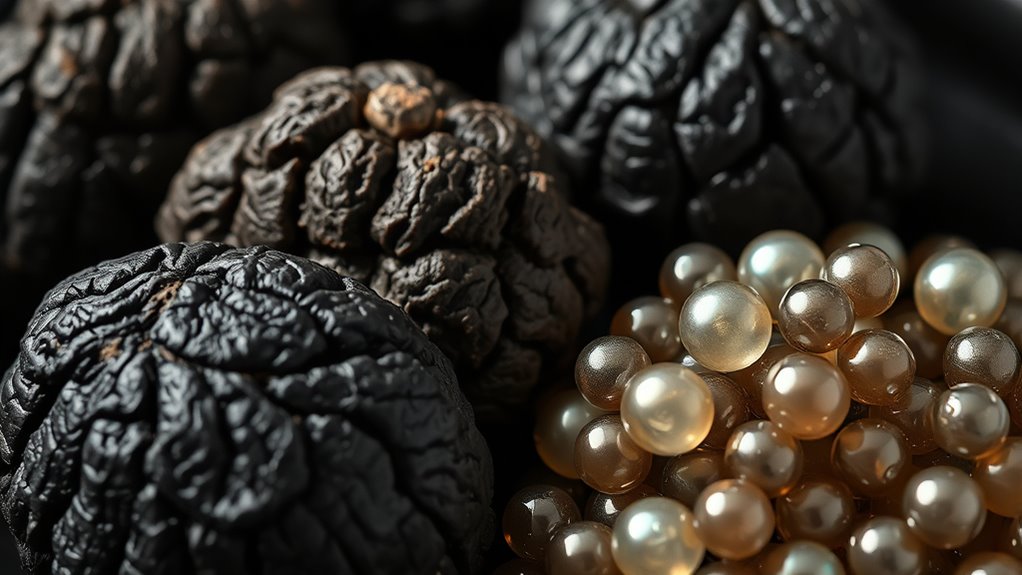
The divine taste of truffles and caviar comes from their rich chemical compounds that activate your senses. Truffles contain glutamates, which boost umami, giving a savory depth, while their earthy aroma stimulates your olfactory senses. Caviar’s amino acids and silky texture create bursts of flavor and tactile pleasure. Together, these factors enhance flavor perception, making these delicacies so extraordinary. Keep exploring to discover how aroma, texture, and chemistry combine to elevate your sensory experience.
Key Takeaways
- Truffles and caviar contain natural compounds like glutamates and amino acids that activate umami receptors, enhancing savory flavor.
- Their aroma compounds stimulate olfactory senses, adding depth and complexity to the overall flavor experience.
- The textures of caviar and truffles melt or release flavors in the mouth, amplifying sensory perception.
- The interplay of aroma, texture, and chemical compounds creates layered, immersive taste profiles.
- These ingredients trigger multiple sensory pathways, resulting in a rich, satisfying, and “divine” flavor sensation.

Have you ever wondered why truffles and caviar taste so extraordinary? It’s not just the rarity or presentation that makes them stand out; it’s the intricate science behind their flavors. At the core, their unique taste profiles are deeply tied to umami enhancement and how they influence your sensory perception. When you savor these delicacies, your taste buds don’t just detect basic flavors—they experience a complex symphony of savory, salty, and subtle aromatic notes that excite your senses.
Umami, often called the fifth taste, plays a pivotal role here. It’s the savory depth that makes food feel full-bodied and satisfying. Truffles are packed with naturally occurring compounds like glutamates, which activate specific receptors on your tongue, amplifying the umami sensation. Caviar, on the other hand, contains amino acids and nucleotides that contribute to its rich, briny flavor. When you bite into a piece of caviar, you’re not just tasting salt; you’re experiencing a layered umami boost that enhances the overall flavor complexity. This umami enhancement doesn’t just make the flavor more intense—it also influences your sensory perception, making the experience more immersive and pleasurable.
Your sensory perception plays a vital role in how you perceive these flavors. It’s not solely about taste; it’s about aroma, texture, and even the way these foods interact with your palate. The aroma compounds in truffles, for instance, are highly volatile and easily detected by your olfactory system. When you smell the earthy, musky notes of a truffle, your brain associates it with a depth of flavor that’s difficult to describe but impossible to ignore. Similarly, the silky, delicate texture of caviar releases subtle flavor bursts as it melts in your mouth, stimulating your sensory receptors and heightening your overall perception. These sensory inputs combine to create an experience that’s more than just taste—it’s an interplay of aroma, texture, and flavor that elevates the dish.
In essence, the extraordinary taste of truffles and caviar stems from their ability to enhance umami and stimulate your senses in complex ways. Their flavor profiles aren’t just about the ingredients but about how those ingredients interact with your sensory pathways. This sophisticated interplay is what makes them so mesmerizing and revered, offering a culinary experience that transcends ordinary taste and immerses you in a domain of rich, layered flavors. Additionally, understanding how sensory perception influences flavor appreciation can help you better enjoy and interpret these delicacies.
Frequently Asked Questions
How Do Truffles and Caviar Develop Their Unique Flavors Naturally?
You might be surprised to learn that truffles and caviar develop their unique flavors through natural processes influenced by scent development and microbial activity. Truffles form underground, with microbial influence shaping their aroma and taste over time. Caviar’s flavor comes from the fish’s diet and the microbial interactions during fermentation. These natural processes create the complex, divine flavors you savor, making each bite an extraordinary experience rooted in nature’s chemistry.
Can Environmental Factors Alter the Taste of Truffles and Caviar?
Imagine a truffle farm where changing climate variability, like a wetter season, enhances the soil’s nutrient profile, altering the terroir influence. Environmental factors like soil composition, temperature, and humidity can profoundly modify the taste of truffles and caviar. You’ll notice that even slight shifts in terroir influence, driven by climate variability, can deepen or diminish their unique flavors, making each harvest subtly different.
What Role Do Genetics Play in the Flavor Profiles?
Genetics greatly influence the flavor profiles of truffles and caviar through genetic variation and flavor genes. You should know that subtle differences in their DNA affect compounds responsible for aroma and taste. These genetic factors determine how truffles and caviar develop their unique flavors, making each batch distinct. By understanding these genetic influences, producers can enhance quality and consistency, ensuring you experience the most refined and authentic flavors possible.
Are There Health Benefits Linked to Consuming Truffles and Caviar?
Think of truffles and caviar as hidden treasure chests packed with health gems. They offer nutritional benefits like high-quality protein and essential fatty acids, boosting your well-being. Plus, their antioxidant properties help fight free radicals, supporting your immune system. Incorporating these delicacies in moderation can give your body a luxurious boost, turning a gourmet experience into a beneficial health ritual. So, indulge wisely and enjoy their natural health rewards.
How Do Storage Methods Impact the Flavor Quality?
You should store truffles and caviar in airtight containers to preserve their delicate flavors. Maintaining proper temperature control is essential; keep truffles in a cool, dark place, ideally around 37°F (3°C), and refrigerate caviar at the correct temperature to prevent spoilage. These methods help retain their freshness, ensuring that their exquisite taste remains intact and enjoyable when you’re ready to indulge.
Conclusion
Now that you understand the science behind their allure, imagine yourself savoring a piece of buttery caviar or a fragrant truffle, each burst of flavor awakening your senses like a secret whispered just for you. The complex chemistry creates a symphony of taste that feels almost magical, connecting you to nature’s hidden treasures. Next time you indulge, remember—you’re experiencing a rare, divine moment crafted by science and nature’s artistry, just for your pleasure.