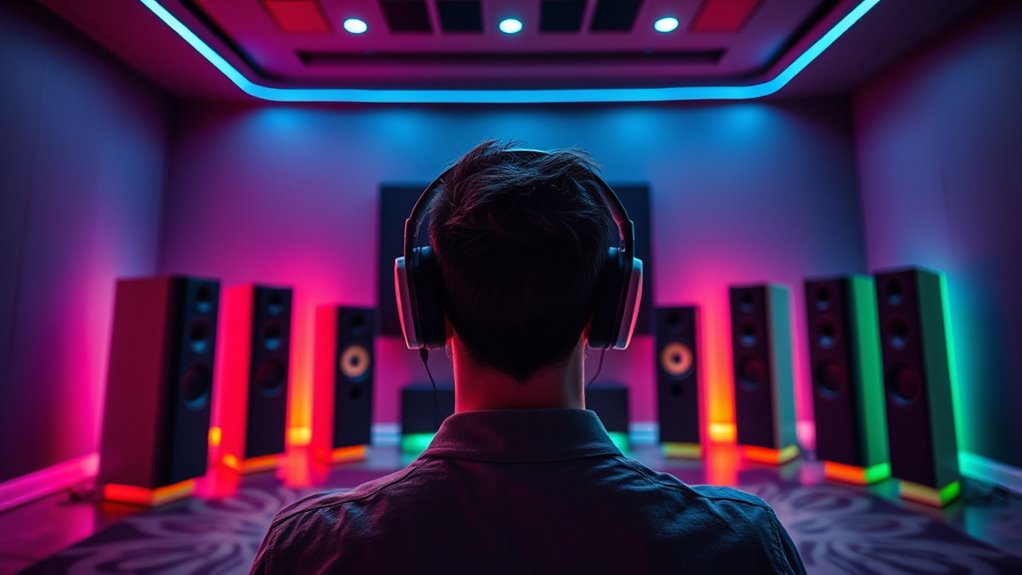

Spatial audio isn’t just hype; it’s a genuine game-changer for immersion. It creates a realistic 3D sound environment that makes you feel surrounded and aware of directions, adding depth and height to your virtual experiences. When well-implemented, it enhances gaming, VR, and entertainment by making sounds seem to come from specific points around you. If you’re curious how this technology transforms digital worlds, there’s much more to discover behind the scenes.
Key Takeaways
- Spatial audio creates a convincing 3D sound environment that significantly enhances immersion in virtual and gaming experiences.
- When properly implemented, it provides accurate sound localization, making virtual environments feel more realistic.
- Advancements in technology, including binaural cues and head-tracking, support seamless, dynamic spatial sound experiences.
- Despite some skepticism, real-world applications demonstrate that spatial audio genuinely boosts user engagement and presence.
- As technology progresses, spatial audio is expected to become even more nuanced, blurring the line between digital and real-world perception.
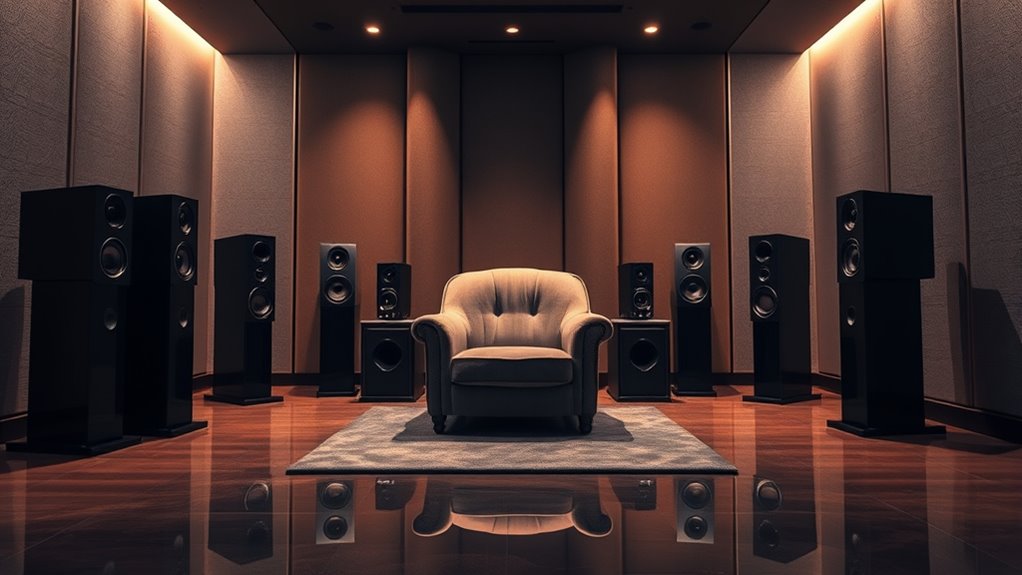
Spatial audio transforms your listening experience by creating a sense of sound coming from specific directions around you. This technology immerses you in a more realistic sound environment, making it feel as if the audio is happening all around you rather than just through speakers or headphones. When you put on a pair of headphones equipped with spatial audio, you’ll notice sounds seem to move seamlessly from one side to another, mimicking how you’d perceive them in real life. This is achieved through 3D sound, which adds depth and height to the audio landscape, making the experience more lifelike. Virtual environments, like gaming worlds or virtual reality experiences, leverage this technology to make you feel truly present within a digital space.
In virtual environments, spatial audio isn’t just a bonus—it’s essential. It helps you locate sounds precisely, whether it’s footsteps approaching from behind, a distant siren, or the rustling leaves overhead. This spatial awareness enhances your immersion, allowing you to react naturally to your surroundings. When developers design these environments, they use sophisticated algorithms to simulate how sound waves interact with your ears, head, and environment, creating a convincing 3D soundscape. The result is a feeling that you’re inside the scene rather than just watching it happen on a screen.
You might think that all audio is created equal, but spatial audio takes it a step further by manipulating sound sources in three-dimensional space. It relies on binaural cues, head-tracking, and advanced processing to deliver a realistic sense of directionality. When you turn your head, the audio adjusts accordingly, maintaining the illusion that sounds are coming from fixed points in space. This dynamic interaction is what makes virtual environments feel so convincing. Whether you’re exploring a new city in a VR app or battling in a first-person shooter, the precise placement of sounds heightens your sense of presence and engagement. Additionally, advancements in European cloud technology are supporting the processing power needed to deliver seamless spatial audio experiences across devices.
Some skeptics question whether spatial audio is merely a gimmick or a genuine breakthrough. The truth lies in the experience: when implemented well, it elevates entertainment and training applications by creating more authentic and intuitive interactions. You’ll find that, in immersive environments, 3D sound transforms your perception, making virtual worlds feel tangible. As technology advances, expect spatial audio to become even more nuanced, further blurring the line between digital and real-world experiences. In the end, whether it’s hype or real immersion, the power of spatial audio is undeniable when you want to feel truly immersed in virtual environments.
Frequently Asked Questions
How Does Spatial Audio Differ From Traditional Stereo Sound?
Spatial audio differs from traditional stereo sound by providing a 3D experience that enhances sound localization, making you feel like sounds are coming from specific directions and distances. Unlike stereo, which mainly uses left and right channels, spatial audio creates an immersive environment by simulating how you perceive sounds in real space. This technology offers a more realistic and engaging experience, surpassing the limitations of stereo versus mono sound.
Can Spatial Audio Be Experienced Without Specialized Headphones or Equipment?
Like trying to see color without a palette, experiencing true spatial audio without specialized headphones is tough. You’ll often face headphone dependency and hardware limitations that make it difficult to fully immerse yourself in spatial sound. While some devices and speakers attempt to simulate the effect, they generally don’t deliver the same precision and depth as dedicated headphones or advanced hardware. For the best experience, specialized equipment is still key.
What Are the Limitations of Current Spatial Audio Technology?
You’ll find that current spatial audio technology faces hardware constraints, which limit sound precision and realism. Latency issues can also disrupt immersion, causing delays that make the experience feel less natural. These limitations mean you might not get perfect, seamless 3D sound everywhere, especially on lower-end devices. As technology advances, expect these issues to improve, but for now, they still pose challenges to fully immersive spatial audio experiences.
How Does Room Acoustics Affect Spatial Audio Quality?
Your room’s acoustics can make or break your spatial audio experience, and it’s no exaggeration to say they’re the secret sauce. Room resonances can distort sound, turning immersive audio into a muddled mess. Acoustic treatments like panels and bass traps are essential—they tame those resonances, enhance clarity, and help your headphones or speakers deliver true 3D sound. Without them, your immersive experience might feel more like a distorted echo chamber.
Is Spatial Audio Suitable for All Types of Content and Genres?
Spatial audio isn’t suitable for all genres, but it offers great genre versatility. You’ll find it enhances immersive experiences in gaming, movies, and music, especially when audience preferences favor rich, three-dimensional sound. However, some genres like spoken word or minimalistic music may not benefit as much. Ultimately, you should consider your content and audience to determine if spatial audio adds value, making the experience more engaging and realistic.
Conclusion
So, is spatial audio just hype or the real deal? Think of it as a secret ingredient that can transform your listening experience from flat to fantastical. As you immerse yourself in sound that surrounds you, you realize it’s more than just technology—it’s a portal to another world. Don’t let the illusion fade; embrace the magic of spatial audio and let your senses lead the way to true immersion. The future of sound is waiting—are you ready to step in?